MLB Picks
Betting on MLB has grown in popularity with a growing number of states offering sports betting across the country. With promotions such as profit boosts and same-game parlays, sportsbooks have a number of ways to draw new users into their apps. Run lines, money lines and totals have become key parts of the daily discussion around MLB, and player props provide another way to take positions during the MLB season and the run up to the World Series. The futures market also allows bettors to wager on who will win the American and National Leagues or which player will be named MVP and Cy Young.
Built using SportsLine's cutting-edge machine learning, predictions and ratings are generated for each player prop by analyzing historical performance, opponent matchup scores, odds, and prop line movements
-
Top-selling MLB jerseys: Dodgers dominate with five players in top 12
Dayn Perry
-
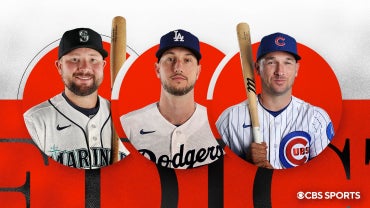
MLB picks: Opening Day best bets with a hot start for Julio Rodríguez
Matt Snyder
-
2026 World Series odds: Best bets to win the Fall Classic
Matt Snyder
-
2026 MLB award predictions: MVP, Cy Young, Rookie of the Year, more
Kate Feldman
-
How the Dodgers can become first threepeat champs in MLB since 2000
Matt Snyder
-
MLB best bets: Picks for pitcher wins, home runs, stolen bases, more
Matt Snyder
-
MLB predictions: 2026 playoff picks with World Series champions
Kate Feldman
-
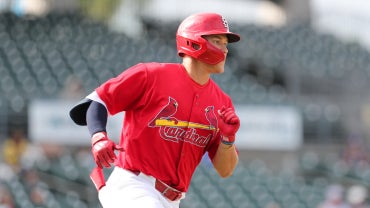
Top Cardinals prospect JJ Wetherholt makes Opening Day roster
Matt Snyder
-
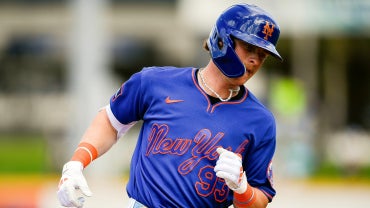
Mets prospect Carson Benge breaks camp as starting RF
Matt Snyder
-
MLB best bets for 2026 season win projections
Matt Snyder
-
Braves to place Strider on IL as decimated rotation takes another hit
Matt Snyder
-
Phillies extend Cristopher Sánchez through 2032
Kate Feldman
-
Jurickson Profar suspended for 162 games after failing PED test
Matt Snyder
-
Ranking 2025 MLB playoff teams most likely to miss in 2026
Matt Snyder
-
2026 World Baseball Classic bracket: Venezuela tops USA in title game
Matt Snyder
-
Meet Nolan McLean, the rookie starting for Team USA in the WBC finals
Mike Axisa
-
Five non-playoff teams from 2025 ready for postseason run in 2026
Matt Snyder
-
Team USA vs. Dominican Republic: Odds, prediction, what to know
Dayn Perry
-
Baseball's March Madness: Experts make WBC bracket predictions
Mike Axisa
-
2026 NL West preview: Lineups, rotations, one question for each team
Matt Snyder
-
2026 NL Central preview: Lineups, rotations, a question for each team
Dayn Perry
-
How can USA advance after shocking loss? WBC tiebreakers explained
Stephen Pianovich
-
Team USA vs. Italy: Prediction, odds, what to know in WBC
Dayn Perry
-
Hunter Greene likely out until July in brutal Reds injury news
Dayn Perry
-
Team USA vs. Mexico: Prediction, odds, what to know in WBC
Matt Snyder
-
2026 NL East preview: Lineups, rotations, one question for each team
Mike Axisa
-
USA vs. Brazil in World Baseball Classic: What to know, how to watcg
Matt Snyder
-
2026 AL West preview: Lineups, rotations, one question for each team
Matt Snyder
-
Best bets for the 2026 World Baseball Classic
Matt Snyder
-
2026 AL Central preview: Lineups, rotations, question for each team
Dayn Perry
-
2026 AL East preview: Lineups, rotations, one question for each team
Mike Axisa
-
Why Tarik Skubal won't be pitching for Team USA in the WBC final
Matt Snyder
-
Ohtani for Cy Young? Here's why it's unlikely for Dodgers star
Matt Snyder
-
MLB picks: Expert's best futures bets for 2026 season includes Dodgers
Jeff Hochman
-
Report: Framber Valdez lands three-year, $115 million deal with Tigers
Mike Axisa
-
Why Puerto Rico is considering pulling out of World Baseball Classic
Dayn Perry
-
Yamamoto joins Japan's WBC roster, Ohtani's pitching role uncertain
Matt Snyder
-
Are the 2026 Mets better than last year after dramatic rebuild?
Matt Snyder
-
Winners and losers of the Kyle Tucker signing
R.J. Anderson
-
Top 10 MLB storylines for 2026
Dayn Perry
This page may contain affiliate links. If you click and sign up, make a deposit, or place a wager, we may earn a commission at no additional cost to you.
Odds and lines are subject to change.
MLB Sports Betting Terms:
-
With several games on the schedule almost every day during the season, including extensive day baseball slates on Wednesday and Sunday, MLB offers sports bettors the opportunity to take positions on baseball outcomes for a large part of the calendar from April through October. Here are some terms worth knowing if you want to become more familiar with MLB betting:
-
Lines
The term “lines” refers to odds for bettable outcomes in MLB games, including money lines, run lines and totals. Betting on the money line involves taking one of the two sides to win the game regardless of the final score. The team that’s favored will return a lower potential profit than the underdog, with the odds offered by sportsbooks correlated to the projected likelihood of each side winning. Money lines listed as negative numbers indicate the size of a wager required to earn $100 in profit. Positive money lines show potential profit on a $100 bet. For example, a -250 favorite would require a $250 bet to have the opportunity to win $100, while a +250 underdog would pay $250 in profit for every $100 wagered if that side wins. Run lines, which are typically set at 1.5, result in adjusted payouts for each side under different win conditions. A favorite of 1.5 on the run line (listed as -1.5) requires the team to win by at least two runs in order to be marked as a winning wager, while an underdog of 1.5 on the run line (listed as +1.5) allows that side the opportunity to cash if the team wins the game or loses by just one run. Close matchups allow for much greater profit potential if bettors are willing to risk laying 1.5 runs, while backing the underdog in projected mismatches becomes more palatable on the run line.
-
Totals
Totals wagering involves betting on how many runs will be scored in a game or in a portion of a game, such as the first five innings. Totals will be listed with a line and interested bettors choose whether the combined scoring output of both teams will be more (Over) or less (Under) than the line, with payouts listed on each side of the total. For example, a total of 8.5 with an Over of -105 and an Under of -115 would return $100 in profit on a $105 Over bet if the combined score of both teams is nine runs or more, while a $115 bet on the Under would return $100 in profit if the two teams combine for eight runs or fewer.
-
Props
MLB props (or proposition bets) have become a major part of MLB betting, allowing bettors the opportunity to wager on outcomes outside the standard game result. These can include player props, game props and team props. Player props are a core component of MLB betting for a lot of people and play a big part in same-game parlays. Players on each team in a matchup have lines assigned to their statistical outcomes, which allows bettors to make wagers on whether those outputs will finish over or under the line. This could involve the number of hits, runs or walks a player accumulates in a game, or sometimes a combination of those stats like the popular market H+R+RBI (hits plus runs plus RBI). Bettors can also back batters to hit a home run, starting pitchers to record a certain number of outs, and many other options.
Team props include team totals, which allow bettors to play over or under the scoring total of just one team in a particular game. Some markets can also involve the first team to score a certain number of runs, or which team will score first in the game.
Game props involve betting on other outcomes not related to a specific player, such as whether there will be a run in the first inning of a particular game or whether a game will go to extra innings.
-
Live betting
In addition to the action that comes before first pitch, sportsbooks also offer a way to bet during MLB games via live betting, adjusting the lines and odds in available markets to reflect the flow of the game, key injury or other factors. This allows bettors to react to changing information or evolving matchup advantages and place bets against the real-time odds offered by a sportsbook.
Live betting can bring strategy into play by providing opportunities to back a trailing team that might have an increased chance of scoring the third time through the lineup against a starting pitcher or when facing a lower-rated or overworked bullpen. Certain at-bats with perceived matchup advantages or disadvantages are also a key component of MLB live betting. Hedging is also a strategy in live betting, giving interested bettors the chance to make a second bet opposite their position taken prior to first pitch at better odds. For example, if a pregame underdog bet at +1.5 on the run line takes an early lead, backing the pregame favorite with a +1.5 live run line bet gives the opportunity to win both bets if the final margin is one run.
-
Futures betting
MLB futures betting involves making bets based around futures outcomes instead of those involving a specific game. These could involve betting on who will win the World Series, win each pennant or make the playoffs. Another popular futures market involves win totals, where bettors can back a team to win more or fewer games in a season than the line set by the sportsbook. For example, a win total bet of Over 89.5 would pay out if a team wins at least 90 games. Awards betting is also available in some states, allowing bettors to back a particular player to win a season-ending award such as MVP, Cy Young or Rookie of the Year. Some players also have lines associated with their season-long outputs, such as how many home runs they will hit during the season.