Computer Vision
What is Computer vision?
Humans use their eyes and their brains
to see and visually sense the
environment around them.
Computer vision is the science that
aims to give a similar capability to a
machine or computer
OR
 Computer vision is a field that
includes methods for
acquiring, processing, analyzing, and
understanding images and, in general
data from the real world in order to
produce numerical or symbolic
information e.g. in the form of decisions
Computer Vision
Goal of Computer Vision
The goal of Computer vision is to process
images acquired with cameras in order to
produce a representation of objects in the
real world.
Computer vision is concerned with the
automatic extraction, analysis and
understanding of useful information from
a single image or a sequence of images
Computer Vision
There already exists a number of working
systems that perform parts of this task in
specialized domains. For example, A
robot can use the several image frames
per second produced by one or two video
cameras to produce a map of its
surroundings for path planning and
obstacle avoidance.
Computer Vision
The application of Computer vision
Face Recognition
Gesture Analysis
Transport
Security and Surveillance
Augmented reality
Robotics etc
Computer Vision
Computer Vision Process
Image Acquisition
Image Processing
Image Analysis
Image Comprehension
Computer Vision
Image Acquisition
The classical problem in computer vision,
image processing, and machine vision is
that of determining whether or not the
image data contains some specific
object, feature, or activity. This task can
normally be solved robustly and without
effort by a human, but is still not
satisfactorily solved in computer vision
for the general case.
Computer Vision
Image Acquisition
Image Acquisition translates visual
information into a format that can be
further manipulated. The computer needs
an eye, in most computer vision systems
that eye is the camera. The camera
translates a scene or image into electrical
signals. These Signals must then be
translated into binary numbers which the
computer can work with it.
Computer Vision
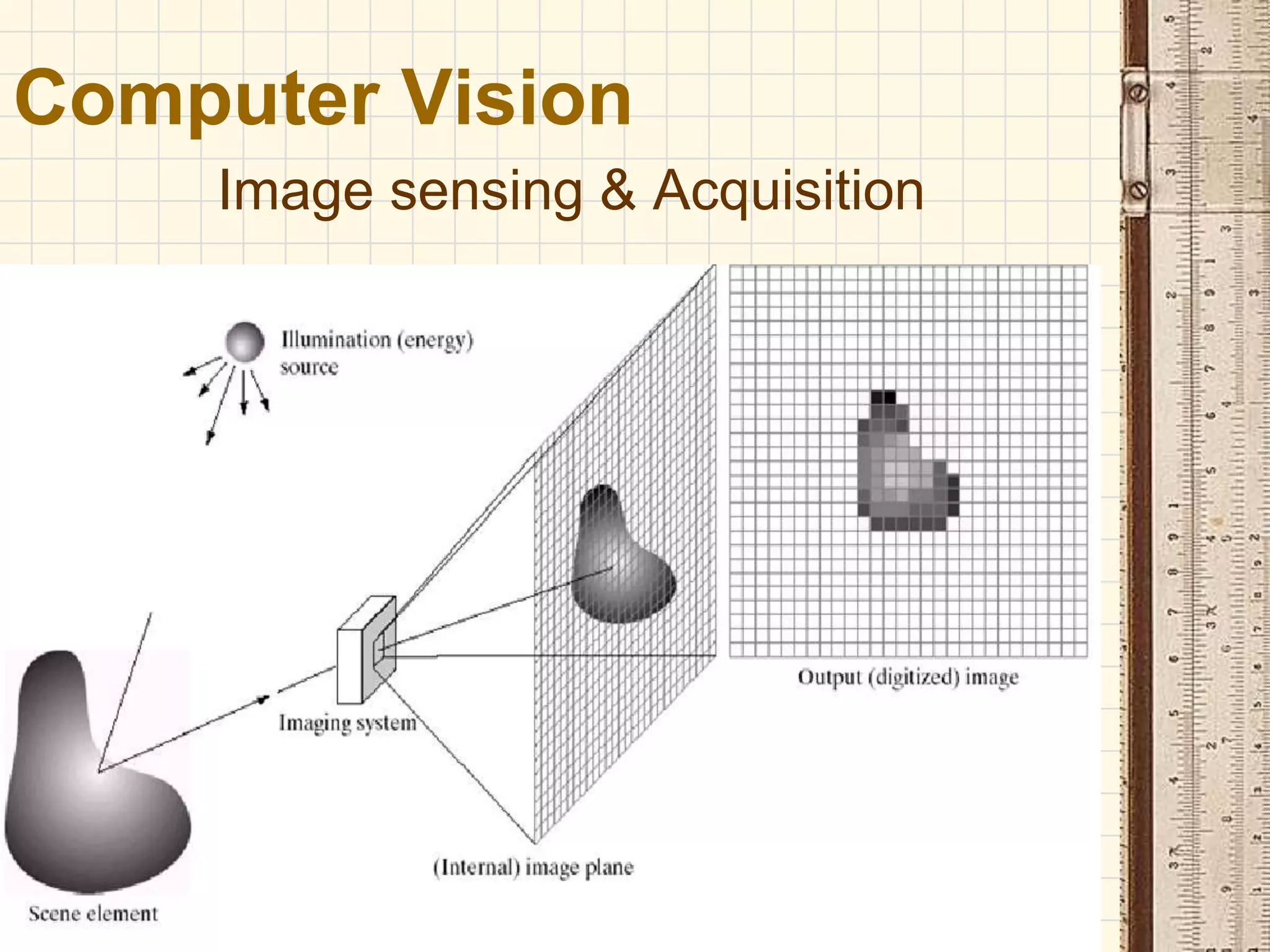
Image acquisition – A digital image is
produced by one or several image
sensors, which, besides various types of
light-sensitive cameras, include range
sensors, radar, ultra-sonic cameras, etc.
Depending on the type of sensor, the
resulting image data is an ordinary 2D
image, a 3D, or an image sequence
Computer Vision
Image sensing & Acquisition
Computer Vision
Processing
The next stage of computer vision
involves some initial manipulation of the
binary data. Image processing helps
improve the quality of the image to
analyze and understand it more
efficiently. Image processing improves
the signal-to-noise ratio. The signal is the
information representing objects in the
image. Noise is any interference that
unclear the objects.
Computer Vision
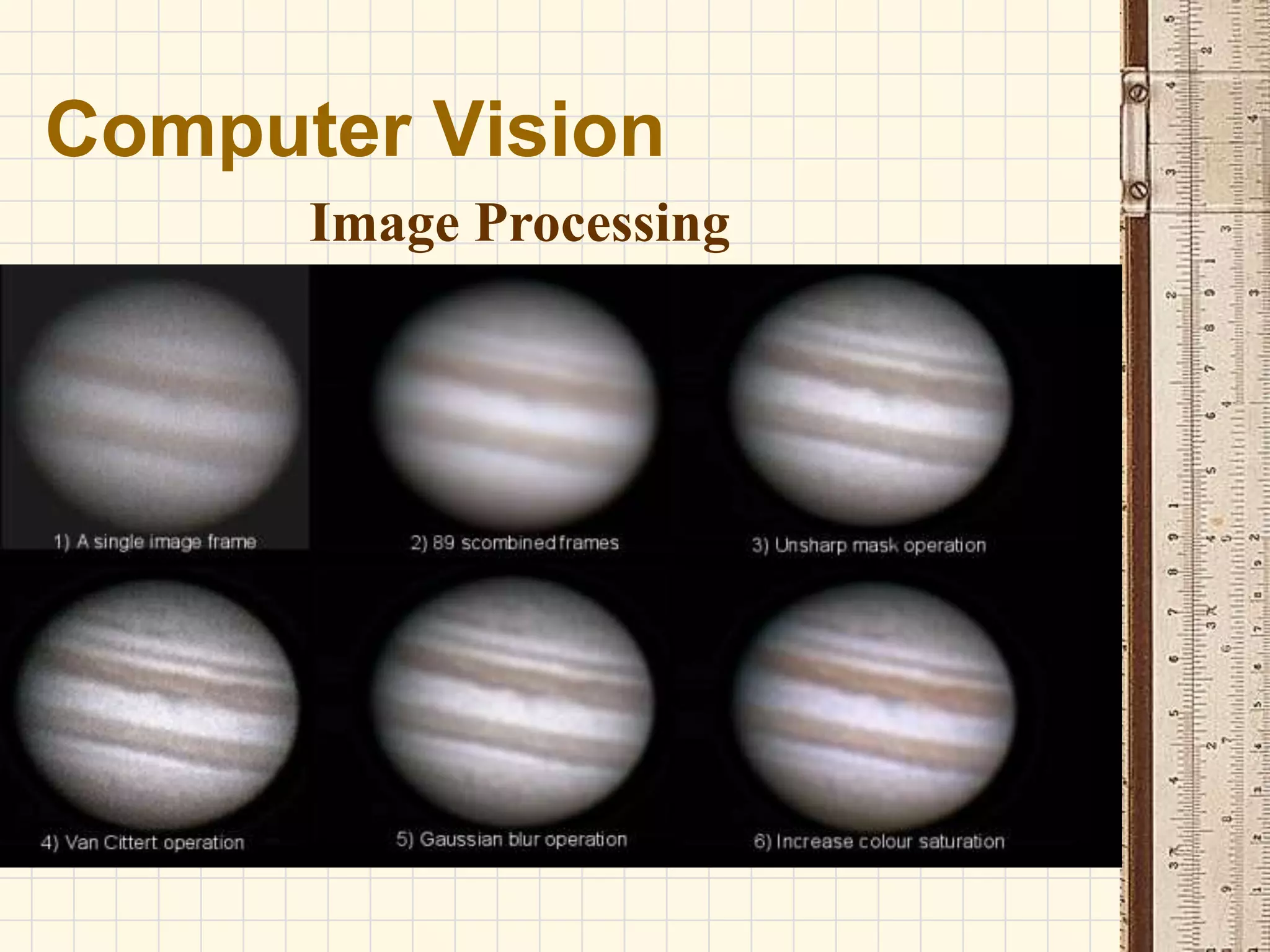
Image Processing
Through various computational means, it
is possible to improve the signal-to-noise
ratio.
For example, the contrast in a scene can
be improved. Flaws, such as unwanted
reflections, can be removed.
Computer Vision
Computer Vision
Image Processing
Image Analysis
Image analysis examines the scene to
determine what is there. A computer
program begins looking through the
numbers that represent the visual
information to identify specific features
and characteristics.
Computer Vision
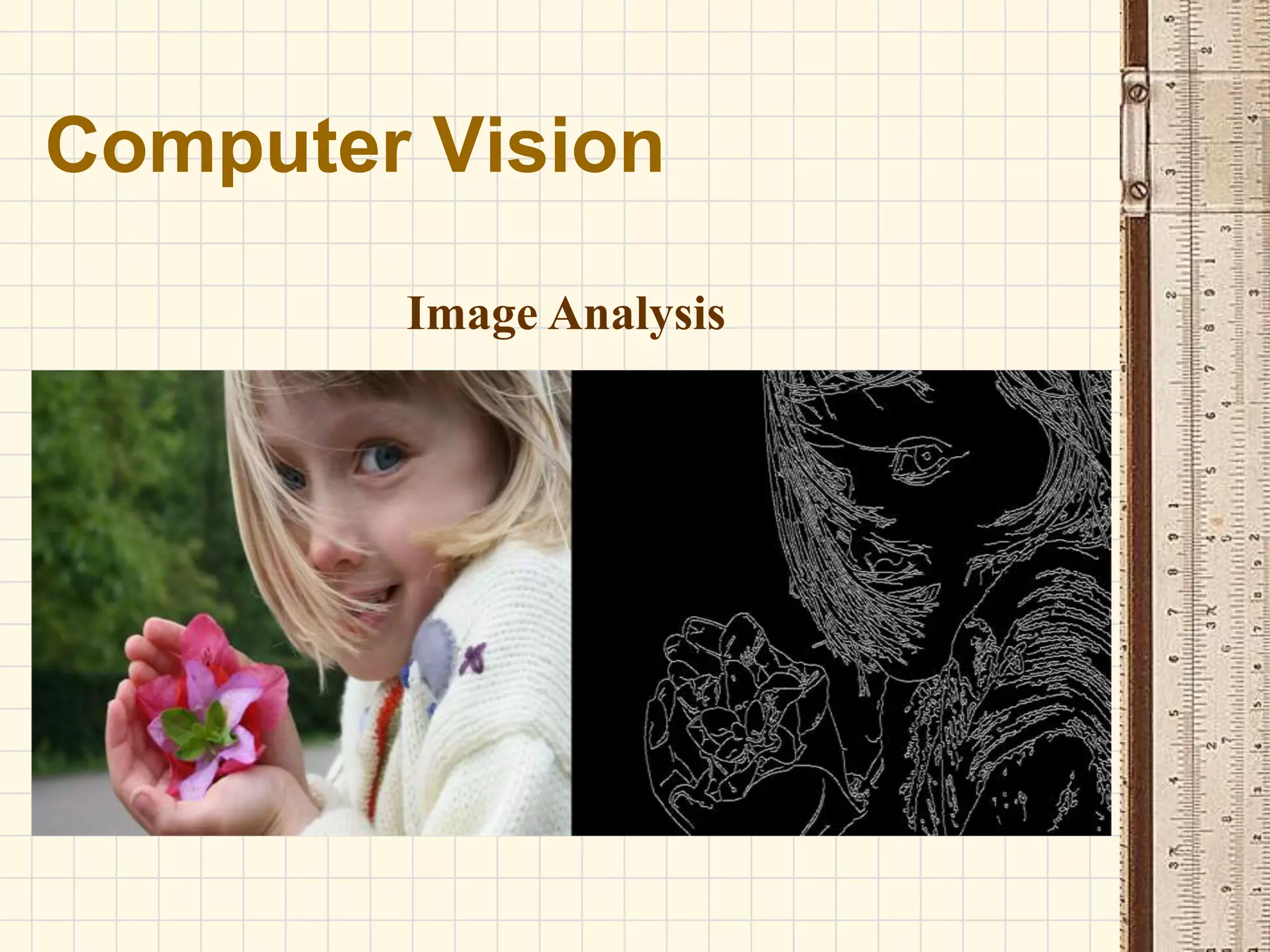
Image Analysis
More specifically, the image analysis
program looking for edges and
boundaries.
An edge is formed between an object
and its background or between two
specific objects
Computer Vision
Image Analysis
Computer Vision
Image Comprehension
 The final step in the computer vision process is
understanding, by identifying specific objects
and their relationship. This portion of the
computer vision process employs artificial
intelligence techniques. The previous steps of
image processing and analysis were done with
algorithms. Now, symbolic processing will be
used to understand the scene.
Computer Vision
Computer Vision VS Image Processing
Image processing studies image-to-
image transformation. The input and out
put of image processing are both images.
Typical image processing operations
include
• Image compression
• Image restoration
• Image enhancement
Computer Vision
Computer Vision VS Image Processing
Computer vision is the construction of explicit,
meaningful descriptions of physical objects
from their images. The output of computer
vision is are a description or an interpretation
or some quantitative measurements of the
structure in 3D scene. Image processing and
pattern recognition are among many
techniques computer vision employs to achieve
its goals
Computer Vision
Computer Vision
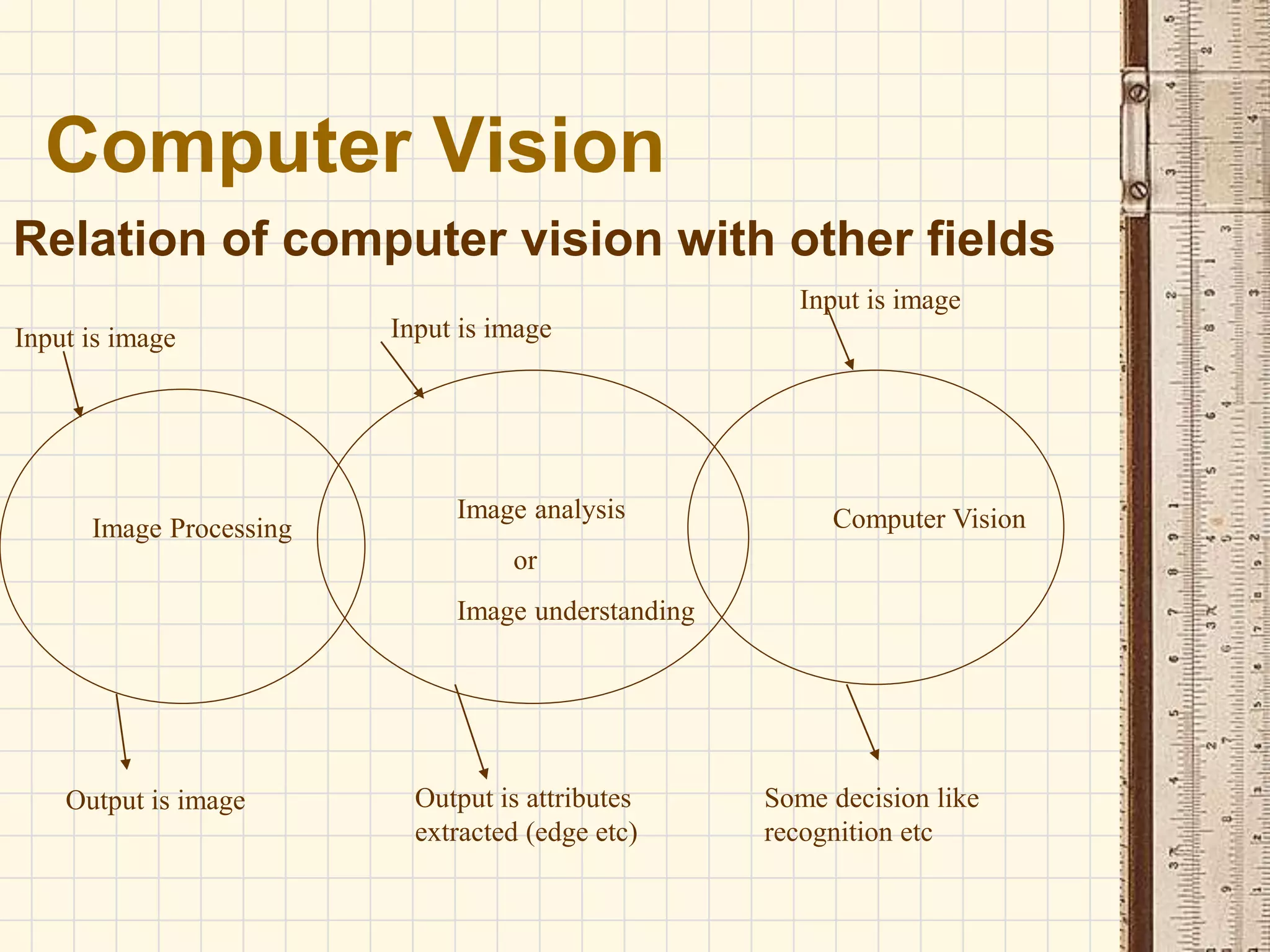
Relation of computer vision with other fields
Image Processing
Image analysis
or
Image understanding
Computer Vision
Input is image
Some decision like
recognition etc
Output is attributes
extracted (edge etc)
Output is image
Input is image Input is image
Human vision VS Computer Vision
• Images generated by
only visible spectrum
can be seen.
• Eyes are perfect sensors
in the normal conditions
• Human brain is very fast
in case of vision
• Human vision is said to
be perfect in normal
conditions.
• Images generated from
any part of the light
spectrum can be seen
• There is no perfect sensor
like human eye.
• Computer is very slow in
case of vision
• Computer vision is not
perfect because of so
many problems (sensors,
algorithms, noise inclusion
etc)

Ai lecture 03 computer vision

  • 1.
    Computer Vision What isComputer vision? Humans use their eyes and their brains to see and visually sense the environment around them. Computer vision is the science that aims to give a similar capability to a machine or computer OR
  • 2.
     Computer visionis a field that includes methods for acquiring, processing, analyzing, and understanding images and, in general data from the real world in order to produce numerical or symbolic information e.g. in the form of decisions Computer Vision
  • 3.
    Goal of ComputerVision The goal of Computer vision is to process images acquired with cameras in order to produce a representation of objects in the real world. Computer vision is concerned with the automatic extraction, analysis and understanding of useful information from a single image or a sequence of images Computer Vision
  • 4.
    There already existsa number of working systems that perform parts of this task in specialized domains. For example, A robot can use the several image frames per second produced by one or two video cameras to produce a map of its surroundings for path planning and obstacle avoidance. Computer Vision
  • 5.
    The application ofComputer vision Face Recognition Gesture Analysis Transport Security and Surveillance Augmented reality Robotics etc Computer Vision
  • 6.
    Computer Vision Process ImageAcquisition Image Processing Image Analysis Image Comprehension Computer Vision
  • 7.
    Image Acquisition The classicalproblem in computer vision, image processing, and machine vision is that of determining whether or not the image data contains some specific object, feature, or activity. This task can normally be solved robustly and without effort by a human, but is still not satisfactorily solved in computer vision for the general case. Computer Vision
  • 8.
    Image Acquisition Image Acquisitiontranslates visual information into a format that can be further manipulated. The computer needs an eye, in most computer vision systems that eye is the camera. The camera translates a scene or image into electrical signals. These Signals must then be translated into binary numbers which the computer can work with it. Computer Vision
  • 9.
    Image acquisition –A digital image is produced by one or several image sensors, which, besides various types of light-sensitive cameras, include range sensors, radar, ultra-sonic cameras, etc. Depending on the type of sensor, the resulting image data is an ordinary 2D image, a 3D, or an image sequence Computer Vision
  • 10.
    Image sensing &Acquisition Computer Vision
  • 11.
    Processing The next stageof computer vision involves some initial manipulation of the binary data. Image processing helps improve the quality of the image to analyze and understand it more efficiently. Image processing improves the signal-to-noise ratio. The signal is the information representing objects in the image. Noise is any interference that unclear the objects. Computer Vision
  • 12.
    Image Processing Through variouscomputational means, it is possible to improve the signal-to-noise ratio. For example, the contrast in a scene can be improved. Flaws, such as unwanted reflections, can be removed. Computer Vision
  • 13.
  • 14.
    Image Analysis Image analysisexamines the scene to determine what is there. A computer program begins looking through the numbers that represent the visual information to identify specific features and characteristics. Computer Vision
  • 15.
    Image Analysis More specifically,the image analysis program looking for edges and boundaries. An edge is formed between an object and its background or between two specific objects Computer Vision
  • 16.
  • 17.
    Image Comprehension  Thefinal step in the computer vision process is understanding, by identifying specific objects and their relationship. This portion of the computer vision process employs artificial intelligence techniques. The previous steps of image processing and analysis were done with algorithms. Now, symbolic processing will be used to understand the scene. Computer Vision
  • 18.
    Computer Vision VSImage Processing Image processing studies image-to- image transformation. The input and out put of image processing are both images. Typical image processing operations include • Image compression • Image restoration • Image enhancement Computer Vision
  • 19.
    Computer Vision VSImage Processing Computer vision is the construction of explicit, meaningful descriptions of physical objects from their images. The output of computer vision is are a description or an interpretation or some quantitative measurements of the structure in 3D scene. Image processing and pattern recognition are among many techniques computer vision employs to achieve its goals Computer Vision
  • 20.
    Computer Vision Relation ofcomputer vision with other fields Image Processing Image analysis or Image understanding Computer Vision Input is image Some decision like recognition etc Output is attributes extracted (edge etc) Output is image Input is image Input is image
  • 21.
    Human vision VSComputer Vision • Images generated by only visible spectrum can be seen. • Eyes are perfect sensors in the normal conditions • Human brain is very fast in case of vision • Human vision is said to be perfect in normal conditions. • Images generated from any part of the light spectrum can be seen • There is no perfect sensor like human eye. • Computer is very slow in case of vision • Computer vision is not perfect because of so many problems (sensors, algorithms, noise inclusion etc)