Log inSign up
Max Aifer
Normal Computing 🧠🌡️
588 posts
user avatar
Max Aifer
Normal Computing 🧠🌡️
@MaxAifer
Theorist @NormalComputing. Thermodynamic computing for efficient AI.
New York, NY
Joined July 2021
2,419
Following
2,584
Followers

New to X?

Sign up now to get your own personalized timeline!

Create account

By signing up, you agree to the Terms of Service and Privacy Policy, including Cookie Use.

Terms·Privacy·Cookies·Accessibility·US TIDA·Ads Info·© 2026 X Corp.
Don't miss what's happening
People on X are the first to know.
Log inSign up
  • Pinned
    user avatar
    Max Aifer
    Normal Computing 🧠🌡️
    @MaxAifer
    Feb 19
    Check out our new paper on the application of lattice random walks to bayesian inference
    user avatar
    Lars Holdijk
    @HoldijkLars
    Feb 19
    Struggling with minibatch noise in Stochastic Gradient Bayesian Inference? Want your chains to naturally run on stochastic hardware? Introducing — Stochastic Gradient Lattice Random Walk! New work from @NormalComputing in collab with @zierhjmensch, @adnarim066, @wellingmax, and
    00:00
    1.2K
  • user avatar
    Max Aifer
    Normal Computing 🧠🌡️
    @MaxAifer
    Oct 3, 2024
    A thread on our new paper Thermodynamic Bayesian Inference 250 years later, Bayes’s theorem is still the gold standard for probabilistic reasoning. But for complicated models it’s too hard to implement exactly, so approximations are used. For example, the complexity of Bayesian
    174K
  • user avatar
    Max Aifer
    Normal Computing 🧠🌡️
    @MaxAifer
    Aug 11, 2023
    Replying to @MaxAifer
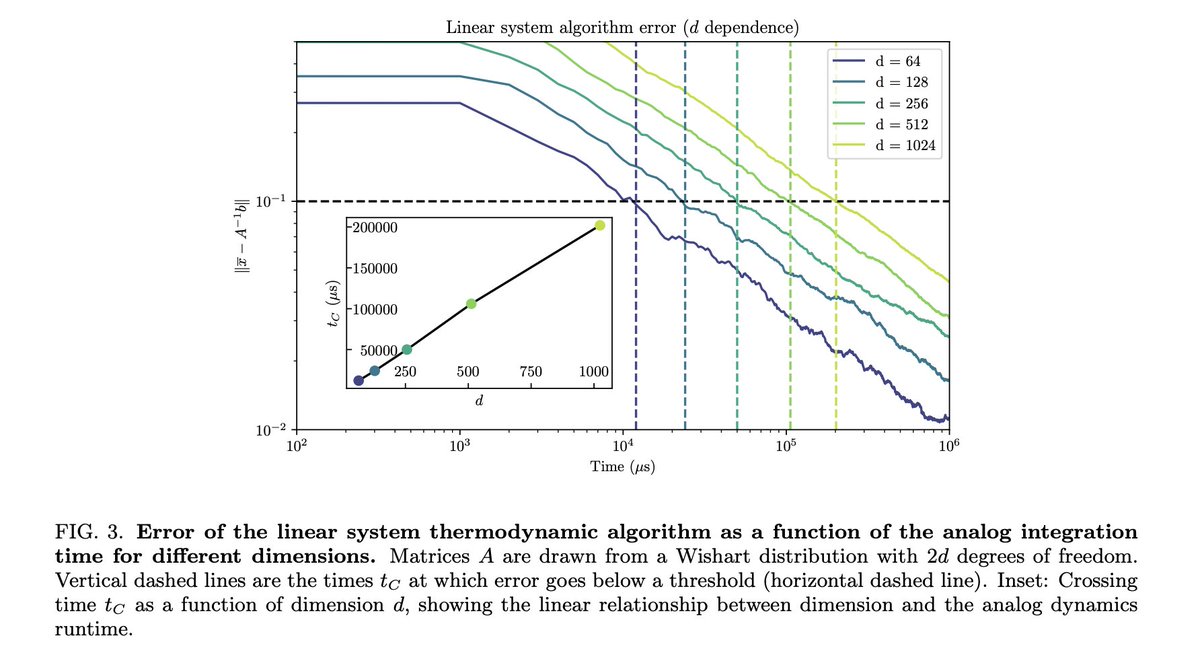
    Enter thermodynamic computing. In this preprint, Thermodynamic Linear Algebra (arxiv.org/abs/2308.05660), we show that a system of coupled oscillators in contact with a heat reservoir can be used to solve linear systems in an amount of time proportional to the number of variables.
    231K
  • user avatar
    Max Aifer
    Normal Computing 🧠🌡️
    @MaxAifer
    Oct 3, 2024
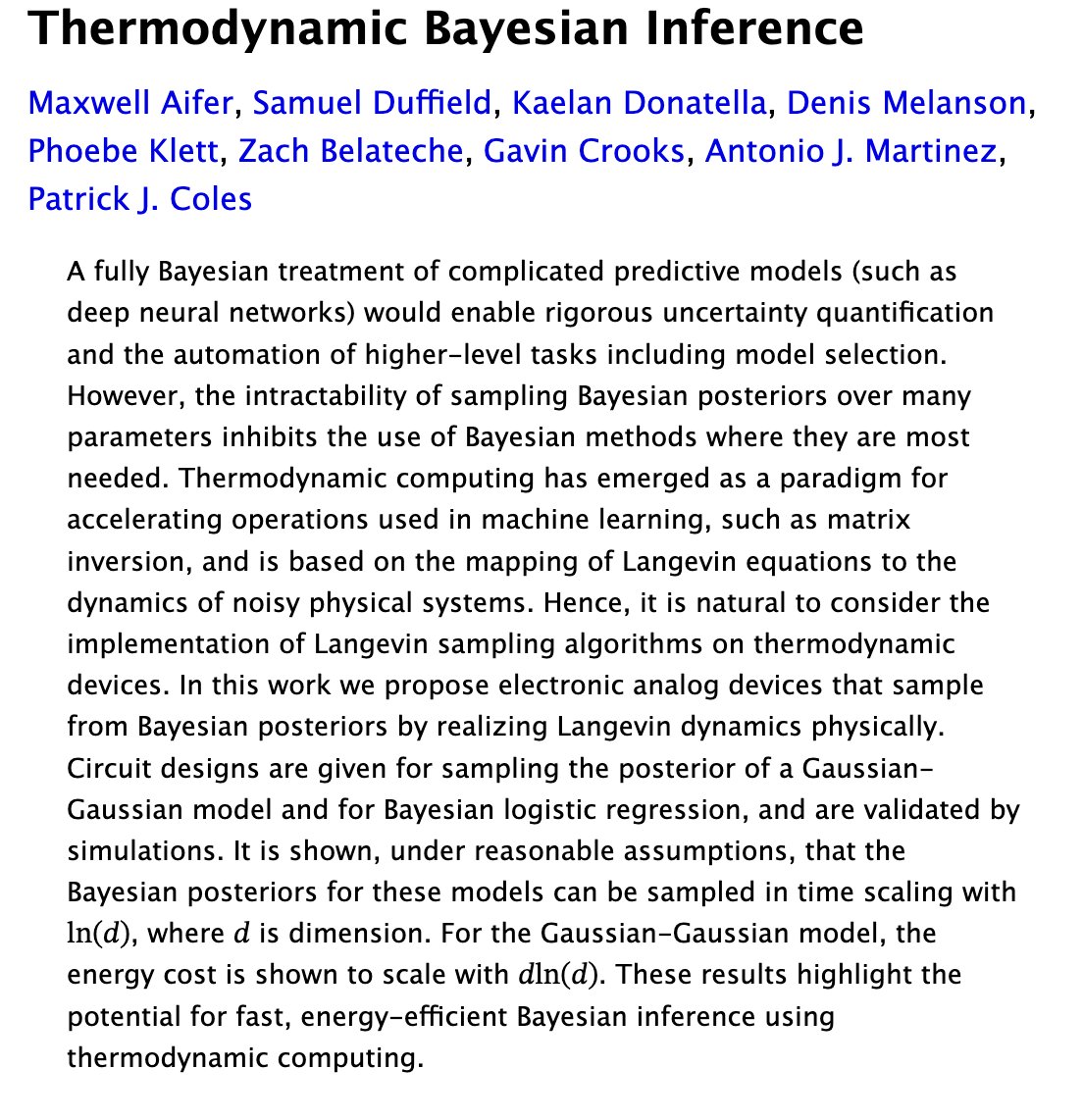
    Introducing Thermodynamic Bayesian Inference. We propose physical systems whose thermal equilibrium states correspond to Bayesian posteriors. This allows for sampling posteriors with improved time and energy costs. Deep dive coming soon.
    38K
  • user avatar
    Max Aifer
    Normal Computing 🧠🌡️
    @MaxAifer
    Oct 31, 2024
    A few months ago we scored a big victory for thermodynamic computing which has been kept quiet until now, and now is the time to talk about it. Based on the ideas in our paper Thermodynamic Linear Algebra (arxiv.org/abs/2308.05660), we wrote a proposal to vastly reduce the cost of
    arXiv logo
    arxiv.org
    Thermodynamic Linear Algebra
    Linear algebraic primitives are at the core of many modern algorithms in engineering, science, and machine learning. Hence, accelerating these primitives with novel computing hardware would have...
    33K
  • user avatar
    Max Aifer
    Normal Computing 🧠🌡️
    @MaxAifer
    Aug 11, 2023
    Finding the point where these three planes intersect is an example of a problem which has been studied for literal millennia: solving a linear system of equations. Billions of dollars have been spent on developing new hardware to solve this and related problems faster.
    41K
  • user avatar
    Max Aifer
    Normal Computing 🧠🌡️
    @MaxAifer
    Nov 13, 2023
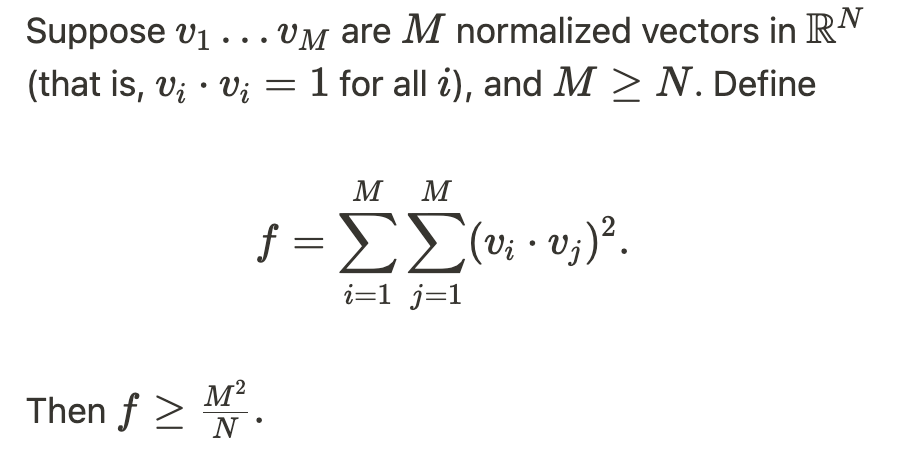
    A basic fact in linear algebra is that an N-dimensional vector space can have at most N linearly independent vectors. Is there a better statement of non-orthogonality when there are more vectors than dimensions? This is the best I could derive:
    35K
  • user avatar
    Max Aifer
    Normal Computing 🧠🌡️
    @MaxAifer
    Apr 22, 2024
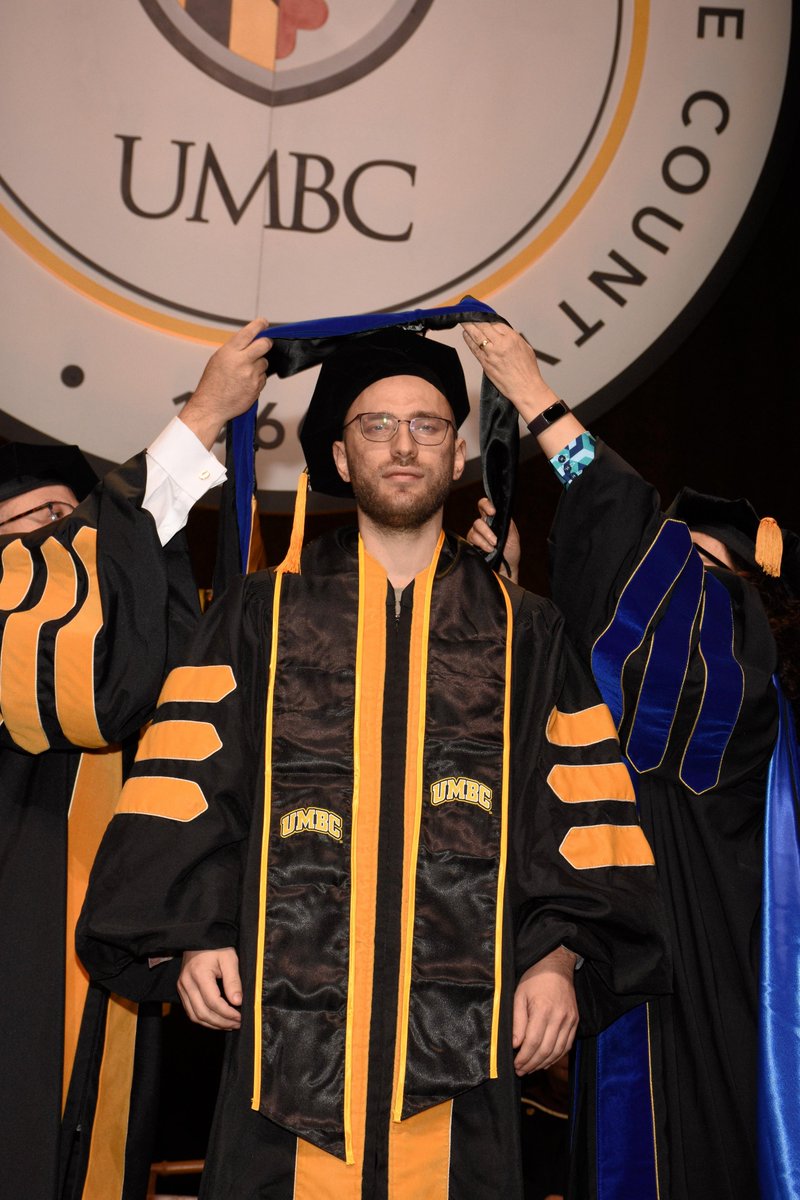
    Just turned in my dissertation. 🎉
    11K
  • user avatar
    Max Aifer
    Normal Computing 🧠🌡️
    @MaxAifer
    Feb 11, 2025
    Thomas appears to have solved it using some dark magic. thanks @thomasahle :)
    18K
  • user avatar
    Max Aifer
    Normal Computing 🧠🌡️
    @MaxAifer
    Feb 5, 2025
    I graduated in December but haven’t gotten around to posting this yet. A lot of people will tell you that a PhD isn’t worth it in the modern job market. In a way, they’re right; and that’s what they’re supposed to say. And what you’re supposed to do, if you love to learn, is
    6.6K
  • user avatar
    Max Aifer
    Normal Computing 🧠🌡️
    @MaxAifer
    Oct 3, 2024
    Replying to @MaxAifer
    In our new paper Thermodynamic Bayesian Inference (arxiv.org/abs/2410.01793), we propose devices which are physical realizations of the systems simulated by the Langevin algorithm. These systems take the form of electronic circuits with noise sources, and come to thermal
    14K
  • user avatar
    Max Aifer
    Normal Computing 🧠🌡️
    @MaxAifer
    Nov 22, 2023
    Quantum parallelisim—the idea that quantum computers gain an advantage by “trying multiple possibilities at once”—is popular but controversial. In fact, quantum mechanics is not even necessary to try multiple possibilities at once: we can achieve this with just thermodynamics.
    16K
  • user avatar
    Max Aifer
    Normal Computing 🧠🌡️
    @MaxAifer
    Aug 11, 2023
    Replying to @MaxAifer
    Thermodynamic algorithms are of growing interest, and our results represent the first rigorously-proven speedups for thermodynamic algorithms. The results also reveal a deep, and wholly unexplored connection between thermodynamics and linear algebra.
    7.4K
  • user avatar
    Max Aifer
    Normal Computing 🧠🌡️
    @MaxAifer
    Apr 28, 2024
    Some good points made here. Some of them are not specific to any one company and more about thermo computing in general, so I’ll try to respond to those:
    user avatar
    kyon
    kisuke
    @0xKyon
    Apr 28, 2024
    unpopular opinion: first off this whole idea of using analog circuits to accelerate ai workloads aint exactly new. ibm intel and others have been experimenting with that shit for years tryna leverage the noise tolerance of neural nets to boost efficiency heres the thing analog
    32K
This post is unavailable.