Washington, DC — The Council on Library and Information Resources (CLIR) is pleased to announce the appointment of Peter Herdrich as Senior Presidential Advisor, Global Partnerships and Cultural Heritage Strategy. Herdrich has worked with CLIR for more than a decade on initiatives in the Middle East and North Africa region. In this new role he Read More
The post CLIR Appoints Peter Herdrich as Senior Presidential Advisor, Global Partnerships and Cultural Heritage Strategy appeared first on CLIR.
]]>Washington, DC — The Council on Library and Information Resources (CLIR) is pleased to announce the appointment of Peter Herdrich as Senior Presidential Advisor, Global Partnerships and Cultural Heritage Strategy.
Herdrich has worked with CLIR for more than a decade on initiatives in the Middle East and North Africa region. In this new role he will provide strategic guidance to CLIR on long-term, large-scale approaches to cultural heritage preservation and documentation, including integrating cultural heritage into emergency response frameworks and addressing ongoing and emerging threats to both tangible and intangible heritage. Additionally, he will advance digitization diplomacy and advocacy efforts, engaging U.S. and international policymakers and institutions to elevate cultural heritage as a global priority, providing counsel to CLIR’s President, Dr. Charles Henry.
Of Herdrich’s appointment, Henry says, “With unique expertise and creative talents, Peter deftly builds coalitions, communities, and transnational partnerships that lead to shared digital environments of our cultural commonwealth. He brings a rare practical diplomacy to an often splintered and fragmented world, and through that vital cohesion fosters the more elusive human condition of hope.”
Over his long and distinguished career Herdrich has served as the CEO of Cultural Capital Group, a strategic consultancy specializing in design and implementation of cultural heritage preservation, digital infrastructure, and government advisory projects. Working with CLIR and other dedicated implementation and funding partners, he has directed digital infrastructure, strategic planning, and documentation projects in Algeria, Egypt, Iraq, and Yemen.
He co-founded The Antiquities Coalition, an international NGO combating looting and illicit antiquities trafficking, served as CEO of the Archaeological Institute of America and Publisher of ARCHAEOLOGY Magazine, held senior roles in broadcast television news as an award-winning producer, and is a founding Board Member of Rare Book School at the University of Virginia.
“Our community’s efforts of the last fifteen years have brought extensive, worldwide attention to the cause of cultural heritage preservation. Still, a glance around the world tells us that the loss of heritage remains at an emergency level. Working with Dr. Henry and CLIR, we will confront this head on – implementing on-the-ground solutions, scaling up projects, strategizing with global partners, and advocating loudly. It is time to act.”
CLIR is an independent, nonprofit organization that forges strategies to enhance research, teaching, and learning environments in collaboration with libraries, cultural institutions, and communities of higher learning. CLIR promotes forward-looking collaborative solutions that transcend disciplinary, institutional, professional, and geographic boundaries in support of the public good.
For more information, visit www.clir.org.
Media Contact:
Amy Lucko
Chief Operating Officer
Council on Library and Information Resources
[email protected]
The post CLIR Appoints Peter Herdrich as Senior Presidential Advisor, Global Partnerships and Cultural Heritage Strategy appeared first on CLIR.
]]>Deadline for Proposals: March 24, 2026 This opportunity has now closed. Commissions for new publications through this series will be announced in May 2026. January 14, 2026 – The Council on Library and Information Resources (CLIR) invites proposals for its “Pocket Burgundy” series. Prospective authors and writing teams can propose ideas for reports based on Read More
The post 2026 Call for Proposals, “Pocket Burgundy” Series appeared first on CLIR.
]]>Deadline for Proposals: March 24, 2026
This opportunity has now closed. Commissions for new publications through this series will be announced in May 2026.
January 14, 2026 – The Council on Library and Information Resources (CLIR) invites proposals for its “Pocket Burgundy” series. Prospective authors and writing teams can propose ideas for reports based on their interests and the needs of the information and cultural heritage communities. Selected authors and teams will be offered a stipend of $3,000 for each publication. The deadline for submissions is March 24, 2026. Decisions will be announced in late May 2026.
Background
For decades, CLIR’s published reports—known informally as “burgundy books” because of the cover color—have been important sources of research, ideas, and guidance in the information and cultural heritage sectors. These publications have typically been in the form of in-depth reports, manuals, and assessments commissioned by CLIR or external funders and designed for online or print publication.
The Pocket Burgundy series creates opportunities for writers connected to the information, cultural heritage, or related sectors to propose publications that address needs not being met elsewhere. Through its work on the series, CLIR benefits from learning about pressing questions facing its constituencies while elevating new voices and promoting new ideas. Since 2021, seven publications have been released in the series.
What types of publications are we looking for?
Traditionally, CLIR’s reports have been in the areas of preservation, digital libraries, emerging technologies, the economics of information, trends in information sharing, curation and use, and the changing roles of library and cultural heritage organizations. CLIR will continue publishing in these areas, while also encouraging submissions on other topics affecting information work anywhere in the world, including but not limited to: addressing climate threats, social and racial justice, changing labor practices, intersectionality, accessibility, sustainability, cultural awareness, and decolonizing and indigenizing approaches to stewardship and research. Prospective authors are encouraged to propose projects relevant to their own work which they believe would benefit libraries, archives, museums, and the communities they serve. Proposals addressing smaller sub-specialties within the information or cultural heritage fields are welcome, as are proposals exploring more obscure intersections between preservation, access, and other fields of inquiry.
Publications proposed for this series should, in their final form, be 30 to 70 pages (9,000 to 21,000 words). These reports should be tightly scoped to either go deeply into a narrow subject or survey a broader topic in a way that raises questions for future exploration. Reports should include succinct executive summaries and visual elements and be accessible and easily navigated. Publications will be released in electronic form under a Creative Commons license and will be openly shared around the world, free of charge.
How can I apply?
To submit a proposal, prepare and upload the following components to the form linked from the program web page:
- Project overview (1 page), including: (1) project title, (2) project summary (250 words max), and (3) preliminary outline or table of contents.
- A project rationale (1 page), including: (1) a description of why the publication is needed and who the audience is, (2) a description of why you are the right person or group to do this work, and (3) a description of why CLIR, and specifically the Pocket Burgundy series, is the right publisher for this work.
- A project plan (1 page), including: (1) a 12-month schedule, and (2) a description of the proposed methodology and data sources. If working with culturally sensitive materials or human subjects/participants, be sure to include any ethical considerations and how they will be addressed in your approach.
- Optional supporting documents: authors and teams have the option to share writing samples and CVs or equivalents (e.g., links to professional websites) for each author.
Applicants are encouraged to read through the program FAQs and to review previous Pocket Burgundy publications prior to submitting their proposals. Questions about this opportunity or the application process should be directed to Christa Williford ([email protected]).
The post 2026 Call for Proposals, “Pocket Burgundy” Series appeared first on CLIR.
]]>November 3, 2025, Alexandria, VA: The Council on Library and Information Resources (CLIR) is now accepting applications for the thirteenth cycle of Recordings at Risk. The Recordings at Risk regranting program funds the preservation of rare and unique audio and audiovisual content on degrading or obsolete time-based media such as magnetic tape, wax cylinders, wire Read More
The post CLIR Now Accepting Applications for Recordings at Risk; Competition Now Open to Canadian Applicants appeared first on CLIR.
]]>November 3, 2025, Alexandria, VA: The Council on Library and Information Resources (CLIR) is now accepting applications for the thirteenth cycle of Recordings at Risk. The Recordings at Risk regranting program funds the preservation of rare and unique audio and audiovisual content on degrading or obsolete time-based media such as magnetic tape, wax cylinders, wire recordings, or early film (with or without sound). CLIR will award grants ranging from $10,000 to $60,000 to successful applicants for projects scheduled to begin September 1, 2026. Funding is made possible through the generous support of the Mellon Foundation.
Recordings at Risk encourages professionals who may be constrained by limited resources and/or technical expertise to take action against the threats of degradation and obsolescence. The program aims to help organizations identify priorities, develop practical strategies for digital transformation, build relationships with partners, and raise awareness of best practices.
Application Process
The Recordings at Risk application is open to eligible nonprofit collecting organizations located in the United States and Canada. Proposals are evaluated by an independent review panel using four primary criteria: the potential public impact of the project, the urgency of undertaking reformatting to avoid risk of loss, the viability of the work plan for preservation, and the approach to legal and ethical concerns affecting access. The submission deadline is February 24, 2026. Information about the application process can be found on the program’s Apply for an Award page.
For media inquiries, please contact: Lizzi Albert, Community Relations Manager, [email protected].
About CLIR
The Council on Library and Information Resources is an independent, nonprofit organization that forges strategies to enhance research, teaching, and learning environments in collaboration with libraries, cultural institutions, and communities of higher learning.
About the Mellon Foundation
The Mellon Foundation is the nation’s largest supporter of the arts and humanities. Since 1969, the Foundation has been guided by its core belief that the humanities and arts are essential to human understanding. The Foundation believes that the arts and humanities are where we express our complex humanity, and that everyone deserves the beauty, transcendence, and freedom that can be found there. Through our grants, we seek to build just communities enriched by meaning and empowered by critical thinking, where ideas and imagination can thrive. Learn more at mellon.org.
The post CLIR Now Accepting Applications for Recordings at Risk; Competition Now Open to Canadian Applicants appeared first on CLIR.
]]>Alexandria, VA, October 28, 2025 – The Council on Library and Information Resources (CLIR) is pleased to announce $3.9 million in funding for sixteen digitization projects through the Digitizing Hidden Collections: Amplifying Unheard Voices program. Forty organizations across fifteen US states and two Canadian provinces will contribute to these projects. In keeping with the program’s Read More
The post CLIR Awards $3.9 Million Through Digitizing Hidden Collections: Amplifying Unheard Voices appeared first on CLIR.
]]>Alexandria, VA, October 28, 2025 – The Council on Library and Information Resources (CLIR) is pleased to announce $3.9 million in funding for sixteen digitization projects through the Digitizing Hidden Collections: Amplifying Unheard Voices program. Forty organizations across fifteen US states and two Canadian provinces will contribute to these projects. In keeping with the program’s focus, the selected collections highlight Indigenous, Alaskan Native, and First Nation peoples; LGBTQIA+ communities; African-American heritage in Maryland, Pennsylvania, and Tennessee; Deaf culture; disability justice; and other historically underdocumented histories, including the lives of enslaved people in the American South.
Digitizing Hidden Collections: Amplifying Unheard Voices is a grant competition for the digitization of rare and unique materials stewarded by collecting organizations in the US and Canada. Launched in 2021, the program is designed to deepen public understanding of the histories of communities whose work, experiences, and perspectives have been insufficiently recognized or attended. Since its launch, the program has awarded nearly $12 million for 49 projects.
“Digitization is an act of creative rediscovery,” said CLIR president Charles Henry. “Through these projects, communities are reclaiming and reinterpreting materials that speak to their histories and identities, enriching the cultural landscape for researchers and the public alike. The Mellon Foundation’s continued support makes this work possible, empowering organizations to connect past and present in ways that strengthen our shared understanding.”
Projects were selected by an independent review panel, which considered the program’s core values of public knowledge, broad representation, authentic partnerships, sustainable infrastructures, and community-centered access when making awards. The list of funded projects is available here.
For ongoing updates and the latest information about CLIR grants, sign up for CLIR’s Grants + Programs Newsletter.
About CLIR
The Council on Library and Information Resources is an independent, nonprofit organization that forges strategies to enhance research, teaching, and learning environments in collaboration with libraries, cultural institutions, and communities of higher learning.
About the Mellon Foundation
The Mellon Foundation is the nation’s largest supporter of the arts and humanities. Since 1969, the Foundation has been guided by its core belief that the humanities and arts are essential to human understanding. The Foundation believes that the arts and humanities are where we express our complex humanity, and that everyone deserves the beauty, transcendence, and freedom that can be found there. Through our grants, we seek to build just communities enriched by meaning and empowered by critical thinking, where ideas and imagination can thrive. Learn more at mellon.org.
The post CLIR Awards $3.9 Million Through Digitizing Hidden Collections: Amplifying Unheard Voices appeared first on CLIR.
]]>CLIR is delighted to announce that Shaneé Yvette Willis will join CLIR as the new Senior Program Officer for DLF, beginning September 2, 2025. With over 14 years of experience in the GLAM (Galleries, Libraries, Archives, and Museums) sector, Shaneé brings a dynamic combination of leadership in community engagement, digital strategy, and cultural heritage programming. Read More
The post Shaneé Yvette Willis to join CLIR as the new Senior Program Officer for DLF appeared first on CLIR.
]]>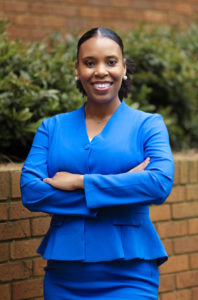
CLIR is delighted to announce that Shaneé Yvette Willis will join CLIR as the new Senior Program Officer for DLF, beginning September 2, 2025.
With over 14 years of experience in the GLAM (Galleries, Libraries, Archives, and Museums) sector, Shaneé brings a dynamic combination of leadership in community engagement, digital strategy, and cultural heritage programming. She most recently served as Program Manager at the HBCU Library Alliance, where she led strategic initiatives across 90+ member libraries and championed collaborative resource-sharing and accessibility.
Throughout her career, Shaneé has advanced digital transformation and inclusion within national networks such as the Digital Public Library of America (DPLA) and in academic settings like the University of West Georgia, where she was both Assistant Professor and University Archivist. Her award-winning leadership has been recognized with honors including the Library Journal’s Mover and Shaker Award in 2021 and Faculty Member of the Year in 2018.
In her new role at CLIR, Shaneé will provide strategic leadership and vision for the Digital Library Federation, aligning DLF’s work with CLIR’s broader mission to enhance research, learning, social justice, and the public good through digital library technologies. She will oversee the development and implementation of DLF program initiatives and events, including the annual DLF Forum, and foster a strong sense of community through active engagement with DLF members, working groups, and partners.
Shaneé Willis brings to DLF and CLIR the exceptional insight and experience of someone who has built communities and successfully applied their collective agency to the most complex challenges of our era. The timing could not be better: with phenomena like AI touching on so many aspects of our professional life, her acumen and leadership skills will help guide a steady, informed exploration of ideas and practices that will define our future.
“Shaneé Willis brings to DLF and CLIR the exceptional insight and experience of someone who has built communities and successfully applied their collective agency to the most complex challenges of our era. The timing could not be better: with phenomena like AI touching on so many aspects of our professional life, her acumen and leadership skills will help guide a steady, informed exploration of ideas and practices that will define our future.”
— Charles Henry, President, CLIR
“Stepping into the Senior Program Officer role for DLF is a natural extension of my commitment to community stewardship and digital transformation,” said Shaneé Willis. “I am particularly excited to contribute to CLIR’s collaborative culture where innovation thrives and to support the growth of our colleagues across the field, especially in light of the challenges we face today.”
—Shaneé Willis
Shaneé holds an MLS from North Carolina Central University, an MDiv from Drew Theological School, and a BA in Religion and Philosophy from Bethune-Cookman University. She is also a graduate of the Archives Leadership Institute and holds certifications in grant writing and nonprofit management.
Please join us in warmly welcoming Shaneé to CLIR and the DLF community!
The post Shaneé Yvette Willis to join CLIR as the new Senior Program Officer for DLF appeared first on CLIR.
]]>CLIR Now Accepting Applications for Digitizing Hidden Collections: Amplifying Unheard Voices Grant Program August 5, 2025, Alexandria, VA: The Council on Library and Information Resources (CLIR) is now accepting initial applications for the fourth cycle of Digitizing Hidden Collections: Amplifying Unheard Voices. This regranting program supports the digitization of rare and unique materials that deepen Read More
The post CLIR Now Accepting Applications for Digitizing Hidden Collections: Amplifying Unheard Voices Grant Program appeared first on CLIR.
]]>
The post CLIR Now Accepting Applications for Digitizing Hidden Collections: Amplifying Unheard Voices Grant Program appeared first on CLIR.
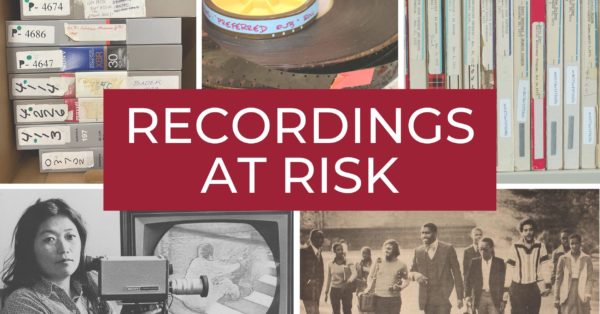
]]>CLIR Funds 21 Digital Reformatting Projects Through Recordings at Risk Alexandria, VA, August 4, 2025: The Council on Library and Information Resources (CLIR) has awarded $814,332 in grants to digitize rare and unique audio and audiovisual materials through its Recordings at Risk program. The program’s twelfth cohort of 21 projects will begin work on September Read More
The post CLIR Funds 21 Digital Reformatting Projects Through Recordings at Risk appeared first on CLIR.
]]>
The post CLIR Funds 21 Digital Reformatting Projects Through Recordings at Risk appeared first on CLIR.
]]>Alexandria, VA, July 17, 2025—The Council on Library and Information Resources (CLIR) has been awarded $3,000,000 by the Mellon Foundation to continue its regranting program to digitize “at-risk” audio and audiovisual materials. The program will launch two competitions in fall 2025 and 2026, awarding funds for digital reformatting projects to take place in 2026-2028. Canadian Read More
The post Mellon Foundation Funds Two Additional Cycles of CLIR’s Recordings at Risk Grant Program; CLIR Opens Competition to Canadian Applicants appeared first on CLIR.
]]> Alexandria, VA, July 17, 2025—The Council on Library and Information Resources (CLIR) has been awarded $3,000,000 by the Mellon Foundation to continue its regranting program to digitize “at-risk” audio and audiovisual materials. The program will launch two competitions in fall 2025 and 2026, awarding funds for digital reformatting projects to take place in 2026-2028. Canadian nonprofit organizations will be eligible to apply for the first time in the history of this program.
The Recordings at Risk regranting program funds the preservation of rare and unique audio and audiovisual content on degrading or obsolete time-based media such as magnetic tape, wax cylinders, wire recordings, or early film (with or without sound). The competition is open to nonprofit academic, research, and cultural heritage organizations based in the United States or Canada.
Since the program’s 2016 inception, Recordings at Risk has awarded nearly $6 million over eleven grant cycles for 190 reformatting projects. A twelfth cohort of awardees is scheduled to be announced later this summer.
“Recordings at Risk exemplifies CLIR’s commitment to preserving the cultural record in all its complexity,” said Charles Henry, President of CLIR. “By supporting the reformatting of rare and at-risk media, we are not only extending the life of fragile recordings, we are expanding access to knowledge, memory, and creativity that might otherwise be lost. With this new phase, we are especially pleased to welcome Canadian institutions into the program, further strengthening the collaborative preservation of our shared audiovisual heritage across borders. We’re deeply grateful to the Mellon Foundation for their continued partnership in this essential work.”
“Expanding Recordings at Risk to include Canadian institutions is an exciting and important development,” said Guy Berthiaume, Chair of CLIR’s Board of Directors and Librarian and Archivist of Canada Emeritus. “This cross-border collaboration recognizes the shared responsibility we have to preserve our audio and audiovisual heritage. I’m proud to see CLIR extend its support to Canadian organizations working to protect and provide access to recordings that document our diverse histories and cultures.”
CLIR will open its next application period in November 2025, and an additional call for proposals will be issued in fall 2026. Awards will range from $10,000 to $60,000 USD and will cover direct costs of preservation reformatting for audio and audiovisual time-based media by eligible organizations working with experienced external service providers. To make their determinations, CLIR’s independent review panel will assess the potential scholarly or public impact of proposed projects, the urgency of undertaking those projects, the viability of applicants’ plans for long-term preservation, and the overall cost-effectiveness of the proposals.
For more information on the program, visit https://www.clir.org/recordings-at-risk/.
The Council on Library and Information Resources is an independent, nonprofit organization that forges strategies to enhance research, teaching, and learning environments in collaboration with libraries, cultural institutions, and communities of higher learning.
The Andrew W. Mellon Foundation is the nation’s largest supporter of the arts and humanities. Since 1969, the Foundation has been guided by its core belief that the humanities and arts are essential to human understanding. The Foundation believes that the arts and humanities are where we express our complex humanity, and that everyone deserves the beauty and empowerment that can be found there. Through our grants, we seek to build just communities enriched by meaning and guided by critical thinking, where ideas and imagination can thrive. Learn more at mellon.org.
For media inquiries, please contact Lizzi Albert, Community Relations Manager, at [email protected].
The post Mellon Foundation Funds Two Additional Cycles of CLIR’s Recordings at Risk Grant Program; CLIR Opens Competition to Canadian Applicants appeared first on CLIR.
]]>Alexandria, VA, July 2025—The Council on Library and Information Resources (CLIR) announces the publication of An Overview of Emulation as a Preservation Method, by Eric Kaltman, Winnie Schwaid-Lindner, Drey Jonathan, Andrew Borman, Alex Garnett, and Larry Masinter. This report is the latest addition to CLIR’s Pocket Burgundy series. Emulation–the use of modern computer systems to Read More
The post CLIR publishes An Overview of Emulation as a Preservation Method appeared first on CLIR.
]]>Alexandria, VA, July 2025—The Council on Library and Information Resources (CLIR) announces the publication of An Overview of Emulation as a Preservation Method, by Eric Kaltman, Winnie Schwaid-Lindner, Drey Jonathan, Andrew Borman, Alex Garnett, and Larry Masinter. This report is the latest addition to CLIR’s Pocket Burgundy series.

Emulation–the use of modern computer systems to run historical software–is a growing practice within libraries, archives, museums, and galleries that is essential to conserving and providing access to the digital past. Emulation makes it possible to interact with historical data and digital artifacts in ways that are more consistent with creators’ intentions, helping contemporary users better understand digital works in their original context. Increasingly, academic and cultural organizations face challenging decisions about whether emulation is the right strategy for their needs as they curate and preserve their collections. An Overview of Emulation as a Preservation Method introduces fundamental concepts related to emulation in practice and explains key considerations to inform sound decision making about when to employ it. The report also includes a review of academic literature related to emulation and suggests new avenues for potential future exploration. Together, the conceptual overview, example use cases, and literature review provide readers new to emulation with an orientation to the current state of practice as well as a thorough understanding of the important role of emulation in the larger field of digital preservation.
The six authors of the report are members of the Software Preservation Network (SPN) Technological Infrastructure Working Group. Over several years, this group has been documenting and sharing insights about emulation workflows actively employed in academic and cultural settings. Their work aims to establish best practices and inform scalable infrastructure solutions that can be broadly shared so that legacy software can become more accessible and maintainable in the future.
“A driving motivation of this Pocket Burgundy is to make emulation more approachable and accessible to people across GLAM [galleries, libraries, archives, and museums], especially those without deep technical backgrounds,” notes author Winnie Schwaid-Lindner. “We were inspired by discussions of emulation over the last several years, where questions relating to its viability, use, and practical limitations frequently come up. We wanted to address these questions.”
Schwaid-Lindner and colleagues were struck by the “robustness of the conversation within the literature review, [which was] helpful in providing a solid body of work and references through which interested readers can go deeper.” She continues, “This report is intended to support a base-level of conversation, on which we hope others will build (or challenge) to help push the field further.”
An Overview of Emulation as a Preservation Method is part of the CLIR Pocket Burgundy series, which features concise publications on topics within the information and cultural heritage sectors. To access this free publication and others from CLIR, visit clir.org/pubs/reports.
About the Council on Library and Information Resources:
The Council on Library and Information Resources (CLIR) is an independent, nonprofit organization that forges strategies to enhance research, teaching, and learning environments in collaboration with libraries, cultural institutions, and communities of higher learning.
For media inquiries, please contact:
Lizzi Albert
Community Relations Manager
The post CLIR publishes An Overview of Emulation as a Preservation Method appeared first on CLIR.
]]>A Collaborative Approach to Advancing Socio-Ecological Transformation The Council on Library and Information Resources (CLIR) and The Integral Ecology Research Network (IERN) arepleased to announce their strategic partnership fostering global collaboration and advancing socio-ecological transformation. This alignment combines CLIR’s expertise in technical implementation and stakeholder engagement with IERN’s academic leadership and tactical integration within global Read More
The post The Council on Library and Information Resources and The Integral Ecology Research Network Announce Strategic Partnership appeared first on CLIR.
]]>
A Collaborative Approach to Advancing Socio-Ecological Transformation
The Council on Library and Information Resources (CLIR) and The Integral Ecology Research Network (IERN) arepleased to announce their strategic partnership fostering global collaboration and advancing socio-ecological transformation. This alignment combines CLIR’s expertise in technical implementation and stakeholder engagement with IERN’s academic leadership and tactical integration within global networks.
Shared Objectives and Responsibilities
CLIR will spearhead technical implementation and field-level activities, sharing innovative tools, knowledge, and resources to optimize project outcomes, facilitating engagement across its membership base, and ensuring alignment with the partnership’s shared objectives.
Dr. Charles Henry, President of CLIR, stated, “This partnership represents a rare, invigorating opportunity to collaborate with a global community of researchers to advance new ways to support discovery and engagement as a means to coherently address the most disruptive crisis we face today.”
IERN, as the academic and strategic lead, will connect integral ecology researchers and practitioners, particularly within the global Jesuit networks, while ensuring adherence to academic standards set by Campion Hall and the University of Oxford.
Fr. Peter Rozic, SJ, expressed enthusiasm for this collaboration, remarking, “I believe that our work together will foster access to vital information sharing across multiple disciplines and communities. We are excited by this development.”
About The Integral Ecology Research Network (IERN)
IERN is an initiative of the Laudato Si’ Research Institute (LSRI) at Campion Hall, University of Oxford. Its mission is to drive academic research, foster global collaborations, and engage scientists, policymakers, practitioners, and communities to promote socio-ecological transformation in line with the principles of Integral Ecology articulated in Laudato Si’ (2015). IERN seeks to bridge the gap for researchers, particularly younger academics, who aspire to incorporate transdisciplinary methodologies into their work and connect research to policy and practice. Additional inquiries to IERN can be directed to Rebecca Wallace at [email protected]
About The Council on Library and Information Resources (CLIR)
CLIR is an independent, nonprofit organization committed to enhancing research, teaching, and learning environments. By collaborating with libraries, cultural institutions, and higher education communities, CLIR develops forward-looking strategies that transcend disciplinary, institutional, and geographic boundaries, all in service of the public good. Additional inquires to CLIR can be directed to Christa Williford at [email protected]
For additional information on this partnership, please visit: https://www.clir.org/ and https://iern.org/.
The post The Council on Library and Information Resources and The Integral Ecology Research Network Announce Strategic Partnership appeared first on CLIR.
]]>A Message from the President This post is also available in: Arabic, French, German, Italian, Māori, Spanish, and Swahili Hope, defined in general terms as an optimistic state of mind based on an expectation of positive outcomes in respect to events and circumstances in one’s life or the world at large, often inspires us to Read More
The post Making the Case for Hope: The Idea of a Not for Profit in a Fractured Time appeared first on CLIR.
]]>A Message from the President
This post is also available in: Arabic, French, German, Italian, Māori, Spanish, and Swahili
Hope, defined in general terms as an optimistic state of mind based on an expectation of positive outcomes in respect to events and circumstances in one’s life or the world at large, often inspires us to adjust the focus of our human agency and our place in the world in order to effect a different, more salutary outcome in the face of prevailing detrimental challenges. In this respect hope is a sophisticated cognitive strategy, and not a simple emotion or wishful state of mind.
Another way to formulate the stratagem of hope is to define it as a narrative, often one of meticulous construction. As with any narrative, the transformative effects of hope require the perception of a temporal continuity: drawing upon experience and knowledgeable insight (that occurred in the past) selectively reconstituted as a series of steps and purposeful iterations (performed in a progressive present) that can then be imaginatively applied to a subsequent reality (future) and, if successful, instantiate that future. The perception that a four dimensional space-time persists and is subject to our intervention is a psychological condition necessary for the praxis of hope. But sustaining that perception of fluid time is aggressively perverted by a variety of phenomena, to the extent that may augur our collective demise.
Impeding counter narratives that thwart and deliberately frustrate a cognitive environment conducive to hope all arise from human ingenuity, and all attenuate the coherence and continuity necessary for a rigorous, sustained, and shared engagement with our global challenges. Calculated disinformation, lies, conspiracy mongering, and manipulated doubt and denial are pervasive machinations. They result often in seriously reducing responsive action to our sundry crises, as they aggressively contribute to an imaginative equivalent of holding time hostage.
More substantively, two well organized and extraordinarily funded phenomena also contribute to mitigating the practice of hope by excessive fragmentation and obscuring of context. Context is a key aspect of understanding knowledge; context includes the circumstances that form the setting for an event, statement, or idea, and can provide terms through which these elements of our world can be fully understood and assessed. Understanding is itself a relation between the knower and an observed object or phenomenon. ‘Taken out of context’ means that a subject is removed from its surrounding circumstances, which can distort its meaning, and efface facts and clues needed to support intelligent behavior. A common feature of disinformation and the varieties of popular cultural media is precisely this decontexualization.
The first is Social Media: the problems with these networks are well established, and documented extensively. These media encourage tribal formations, are reductive in simplicity of social engagement (I like this), and in some cases are themselves ephemeral, images vanishing within a fairly short time frame without a trace. Built upon very short snippets of information exchange, the brevity of expression promotes short-term thinking and removes context from many if not most exchanges. A reliance on singular images to express thoughts, anonymity, and a reliance on performative statements as opposed to a dialogue or substantive conversation epitomizes a kind of denaturing of nuanced, evolving thought formation. Self-referential environments of narrowly targeted ‘recommend’ algorithms tightly encapsulate our sense of self and agency resulting in a complacency of inaction.
Another incessant source of fragmentation and disconnect is the tremendously profitable and seemingly ubiquitous broadcast of news and current events. The methods of conveyance of the news have long been subject to inquiry and consternation for decades. Advertisements, social media, 24 hour coverage of often repeated headlines, the endless unspooling of chyrons—think pop-up news feeds, breathless breaking news, flashing pictures, and an unrelenting reliance on the cheap, reductive drama of contending forces and antithesis (often manufactured to gain attention and emotional connection), foreclose the causal framework that surrounds us. A pixilated float of fragments, shorthand, and snippets disassociate our world, not explicate it, and functionally obscure the depth and complexity required to understand our present dangers.
More benign, but certainly consequential, we might include a third example of narrative patterns that can impede the development of larger contexts and deeper interconnections: the traditions of storytelling in higher education. Contra social media and broadcast news, categorized as popular culture whose negative influence is more easily intuited, universities are often considered a bulwark against the fragmentation evident in social media and contemporary coverage of current events, but this assumption needs to be nuanced.
Much of the problem with narratives produced in higher education can be traced to what we call the arithmetic of prestige. These narratives include not only the artifacts of production (books, journal articles, essays) but also the stories used for promotion and reward for those working within this culture. Regarding the public face of institutions, as a matter of branding, each prize their distinctive, often idiosyncratic, history and mission. Schools aggressively compete for students, funding, faculty, and materiality grounded in this mannered uniqueness, impeding collaboration and cross institutional cooperation. Internally, the strength of their human and intellectual resources relies on pervasive conformities. Disciplines embrace epistemologies that support their respective grammars, vocabularies, research methodologies, and conventions. Professional advancement within these disciplines often depends on mastering the specialized wordplay and guild-like conventions, which also prorogues interdisciplinary and transdisciplinary research that is increasingly understood as essential to address the complex, existential problems.
The organization of academic knowledge atomizes our understanding of the world, to the extent that broader collaboration and multifaceted expert inquiry—a robustly polyvalent human agency—can be significantly curtailed.
One of the most threatening, intricate challenges we confront today is climate change. The story of climate change is itself a grand narrative with a conundrum at its core. This unprecedented environmental catastrophe is caused by advanced, cultivated human endeavor. Feats of engineering, our ingenious economic instruments, our reclamation and refinement of dormant energy, our sophisticated algorithms are prologue to our undoing.
Earth has been terraformed by our vision, formulations, and ideas, by our values and aspirations. The now roiling planet is an exhibit of the human mind made manifest. We have thought this world into being and fashioned an interlocking cascade of phenomena that have coalesced to scorch, drown, and asphyxiate us. Achingly difficult to grasp, we are manufacturing our ruin.
The loss of our collective cultural heritage predicted by more violent, stochastic climate events is increasingly a focus of CLIR. This priority builds upon CLIR’s history of preserving and making accessible valuable resources of our collective legacy: how we can safeguard our cultural record, both artifactual and ephemeral, and manage it for reuse and adoption by future generations.
In light of the complexity of climate change, we expect our projects to be more faceted, much longer term, international, and more broadly collaborative. In this model sustainability and infrastructure are understood as symbiotic and undetachable functions, and socially based. Durability is largely dependent on human behavioral choices, as opposed to simply more money and wider technical bandwidth. The time and investment for greater systemic social and intellectual engagement repurposes these efforts to become less of a project in the traditional sense, more of a catalyst for progressive entanglement. We have named this method ‘generative sustainability.’
‘Bringing life to knowledge’ captures the essence of CLIR’s work. A phrase with several layers of meaning, it connotes the humanity that we engage with through our projects—those who prioritize, design, and execute the goals of our regranting. It also refers to the life of the mind that is requisite for the durability of these projects and the intellectual assets they engender. All of CLIR’s work is meant to improve the capacities of planning and organization; making decisions; adaptation to change; evaluating and assessing the importance of newly discovered information resources; and applying that knowledge. CLIR is a memory organization of a vigorously animated sort.
With this increased capacity we can work together within more accurate and sophisticated contexts, and from these contexts arise new stories. The heart of CLIR’s contribution to the public good are narratives, created through discoveries made searching previously hidden resources; new insights derived from restored cultural artifacts that would otherwise deteriorate into silence; celebrations arising from the public accessibility to community archives; the reports of new communities brought together to save their heritage from the ravages of climate change. In each of these instances CLIR provides the opportunity for a more embracing context that fosters deeper understanding.
The application of new capacities is itself a story, one that requires a sensibility of the coherent flow of time, subject to human agency, a bold counter to the divisive distractions and blunt noise of our fragmented discontent, evoking keener intimations of hope.
In Memoriam
Clifford Lynch
Through his wisdom we could always find hope.
This post is also available in: Arabic, French, Italian, Māori, Spanish, and Swahili
The post Making the Case for Hope: The Idea of a Not for Profit in a Fractured Time appeared first on CLIR.
]]>The Council on Library and Information Resources (CLIR) and Bibliothèques national de France (BnF) signed a memorandum of understanding April 10, 2025, supporting data-sharing between the Digital Library of the Middle East (DLME) and Bibliothèques d’Orient. The CLIR-BnF MOU aims to aggregate records from Bibliothèques d’Orient, a collaborative digital platform powered by Gallica, the digital Read More
The post CLIR and Bibliothèques national de France Announce MOU Share Collections on the DLME appeared first on CLIR.
]]>The Council on Library and Information Resources (CLIR) and Bibliothèques national de France (BnF) signed a memorandum of understanding April 10, 2025, supporting data-sharing between the Digital Library of the Middle East (DLME) and Bibliothèques d’Orient.
The CLIR-BnF MOU aims to aggregate records from Bibliothèques d’Orient, a collaborative digital platform powered by Gallica, the digital library of BnF and its partners, which brings together specialized collections from the Middle East into DLME.
Included in the collection, and available through DLME, will be records from:
- The Institut français d’archéologie orientale (IFAO), Cairo
- The Centre d’études alexandrines (CEAlex), Alexandria
- The Institut français du Proche-Orient (Ifpo), Beirut-Amman-Damascus
- The Institut français d’études anatoliennes (IFEA), Istanbul
- The Institut dominicain d’études orientales (Idéo), Cairo
- The École biblique et archéologique française (Ébaf), Jerusalem
- The Bibliothèque orientale (BO), Beirut
- The Bibliothèque universitaire des langues et civilisations (BULAC), Paris
- The Historical Archives of the Latin Patriarcate, Jerusalem
- The Library of the Custody of the Holy Land, Jerusalem
- The Zheen Center for Documentation and Research, Slemani
- The Scriptorium Syriacum of the Chaldean Antonian Order of Saint Hormizd, Erbil[GC2]
- The Institute of Arabic Manuscripts of the Arab League Education, Cultural and Scientific Organization, Cairo
For more information about the Digital Library of the Middle East, please visit: https://dlmenetwork.org/library/about/about.
About CLIR
The Council on Library and Information Resources is an independent, nonprofit organization that collaborates with libraries, cultural institutions, and communities of higher learning to develop strategies to enhance research, teaching, and learning environments.
About DLME
The DLME is a collaborative effort that aspires to create a sustainable digital environment for the cultural heritage of the Middle East and North Africa (MENA) region while providing an array of applications, tools, and descriptions that enrich the content, facilitate sophisticated inquiry, and engage with the broadest possible community of practice.
About BnF
The BnF’s mission is to collect, catalog, preserve, enrich, and communicate the nation’s documentary heritage. The BnF ensures access to the collections for as many people as possible, both on-site and remotely, and develops national and international cooperation.
About Bibliothèques d’Orient
Launched in 2017, Bibliothèques d’Orient (Libraries of the Middle East) brings together specialised collections on the history, societies, and cultures of the Middle East – from Egypt to Iraq and Turkey—as well as on the interactions between France and this area until the mid-20th century.
About Stanford
Stanford Libraries collaborates with global partners in the development of digital technologies, tools, and services impacting libraries and archives. With a collection of over 12 million items and 14 miles of archival holdings, Stanford Libraries has created a dynamic discovery environment designed to improve access to and preservation of global artifacts valuable to the research and teaching at Stanford and beyond.
The post CLIR and Bibliothèques national de France Announce MOU Share Collections on the DLME appeared first on CLIR.
]]>