Artistic license - History
Anime
TV, 2024,
25 eps
Me:-
Author:-
There is no evidence that "pear of anguish" depicted in the show was actually ever used for torture historically.

TV, 2024,
12 eps
Me:-
Author:-
Hojo Tokiyuki was a real figure who escaped Kamakura after his family's deaths and was sheltered by Suwa Yorishige while he planned his return to power. Given the exaggerated nature of the characters and Yorishige's power of seeing into the future, it's clear the manga will not try too much Realistic.

TV, 2024,
12 eps
Me:-
Author:-
Torture Princess: Fremd Torturchen: Drawing and quartering was a fairly well-known historical means of Cruel and Unusual Death, but it wasn't done the way depicted in volume one. Drawing and quartering consisted of partial strangulation by hanging, followed by disembowelment and castration, followed by beheading and dismemberment ("quartering"). What Elisabeth refers to as "drawing and quartering" when she inflicts it on the Knight, is actually a dismemberment by four "horses"

TV, 2023,
24 eps
Me:-
Author:-
you would rarely see natural colored eyes in important characters, notice how all Loulan's maids were dark haired, dark eyed but suddenly Renpu had golden eyes like Loulan (just because in the anime they had to pass as each other).
• it's impossible for a prince to be disguised as a eunuch managing the Emperor's women, not even for training.
• there's no way she'd make a diagnosis through hearing about symptoms alone, without seeing the patient in person, because that's not how traditional Chinese medicine works.
• it's impossible for a prince to be disguised as a eunuch managing the Emperor's women, not even for training.
• there's no way she'd make a diagnosis through hearing about symptoms alone, without seeing the patient in person, because that's not how traditional Chinese medicine works.

TV, 2023,
12 eps
Me:-
Author:-
Ayakashi Triangle: Shirogane has the distinct bent ears of a Scottish fold. Scottish folds didn't exist until the 1960s, while Shirogane has been around since the early 1600s. He is a shapeshifting spirit, so he technically could have changed his form more recently.

TV, 2022,
12 eps
Me:-
Author:-
in the anime Nijika using some sort of newer iPhone with the more recent camera layout Should be either the iPhone 11 or 12 due to the larger notch which was made smaller in the 13. Can't be the 10 since the camera was different. iPhone 11 was released in 2019, but in the Manga Manga Nijika using a much older phone with a physical home button. The manga should take place in 2017 since the first chapter was released in the same year.

TV, 2022,
12 eps
Me:-
Author:-
the plastic Heinz ketchup bottles didn't exist Until the 80s. In reality, ketchup was used by ordinary craftsmen in the 60s Without a Food Brand.
TV, 2020,
12 eps
Me:-
Author:-
The main premise—a Plucky Girl working hard to rise up the ranks in the all-male and openly misogynistic world of Italian Renaissance art and proving her detractors wrong with her work ethic and determination—is called into question by the fact that quite a few famed female artists in Renaissance Italy existed, such as Sofonisba Anguissola, who later became court painter to Philip II of Spain. All of Anguissola's extant writings and correspondences suggest that she was treated with respect in the art world from a young age not only because of her talent but also because professional artists, who largely came from the merchant and laborer classes, would not dare speak ill of a noblewoman. The manga's portrayal of the Renaissance art world as not only exclusively male but openly hostile to any woman trying to enter it seems to be much more exaggerated than it actually was—since Arte is of noble birth, in reality, historical evidence suggests that there would be little to no chance that she would have been mocked to her face for trying to become an artist like in the series.
TV, 2019,
24 eps
Me:-
Author:-
The story has many historical characters and generally has a nice sense of the "feel" of the era, but is not very accurate to the specifics of real history.
• For instance, the great explorer Thorfinn didn't join a band of vikings at the age of 6 to avenge his father's murder, followed by being sold into slavery for a good 8 years before beginning his expedition.
• Likewise, his father wasn't a Jomsviking and his grand uncle wasn't Thorkell the High. He may have been descended from the semi-legendary Bjorn Ironside, though.
• And Canute's rise to the throne presumably was not so dramatic as having his father assassinated by a descendant of Artorius, the figure King Arthur is based on.
• The extent that the Welsh keep to their old Roman identity and culture (since they were formerly Romano-British under the Western empire) is exaggerated for dramatic reasons. Also the Welsh Roman past and present as depicted falls victim to Hollywood History with their dress, technology and even naming conventions being centuries out of date, such that they would not look too out of place alongside the Romans of Asterix. Granted, they're supposed to be deliberately out of sync with the world around them.
• Related to the above, the series goes along with the theory that the historical King Arthur was (or was based on) a Romano-British warlord who fought the invading Anglo-Saxons (English). Disregarding the fact that the very existence of a "real" King Arthur is still hotly debated among historians, this lines up with the earliest depictions of Arthur, and with contemporary or near-contemporary figures whose historical existence is accepted like Ambrosius Aurelianus who entered early Arthurian legend as Arthur's uncle (and weirdly, one of the prototypes for Merlin). But the historical Arthur in-universe is implied to have been named Lucius Artorius Castus since Askeladd was named after him. Artorius Castus was a verifiably real person, but the theory in particular that he was the "real" King Arthur has been largely rejected since he lived at least three centuries apart from Ambrosius and supposedly Arthur, and he had little in common with Arthur besides somewhat similar names and having been in Britain. Even the time he served in Britain was as a senior officer with a desk job (camp prefect) in contrast with Arthur's warrior reputation.
• For instance, the great explorer Thorfinn didn't join a band of vikings at the age of 6 to avenge his father's murder, followed by being sold into slavery for a good 8 years before beginning his expedition.
• Likewise, his father wasn't a Jomsviking and his grand uncle wasn't Thorkell the High. He may have been descended from the semi-legendary Bjorn Ironside, though.
• And Canute's rise to the throne presumably was not so dramatic as having his father assassinated by a descendant of Artorius, the figure King Arthur is based on.
• The extent that the Welsh keep to their old Roman identity and culture (since they were formerly Romano-British under the Western empire) is exaggerated for dramatic reasons. Also the Welsh Roman past and present as depicted falls victim to Hollywood History with their dress, technology and even naming conventions being centuries out of date, such that they would not look too out of place alongside the Romans of Asterix. Granted, they're supposed to be deliberately out of sync with the world around them.
• Related to the above, the series goes along with the theory that the historical King Arthur was (or was based on) a Romano-British warlord who fought the invading Anglo-Saxons (English). Disregarding the fact that the very existence of a "real" King Arthur is still hotly debated among historians, this lines up with the earliest depictions of Arthur, and with contemporary or near-contemporary figures whose historical existence is accepted like Ambrosius Aurelianus who entered early Arthurian legend as Arthur's uncle (and weirdly, one of the prototypes for Merlin). But the historical Arthur in-universe is implied to have been named Lucius Artorius Castus since Askeladd was named after him. Artorius Castus was a verifiably real person, but the theory in particular that he was the "real" King Arthur has been largely rejected since he lived at least three centuries apart from Ambrosius and supposedly Arthur, and he had little in common with Arthur besides somewhat similar names and having been in Britain. Even the time he served in Britain was as a senior officer with a desk job (camp prefect) in contrast with Arthur's warrior reputation.

TV, 2019,
26 eps
Me:-
Author:-
In Demon Slayer: Kimetsu no Yaiba is set in the TaishÅ era of Japan and thus many of the oddities (trains, electricity and guns) to anyone who could easily mistake it for a Jidaigeki setting, are actually accurate. However when it comes to clothing, particularly the outfits of several female characters, accuracy is thrown out of the window for the sake of Rule of Sexy Fanservice. While there was greater freedom compared to previous eras. Nezuko's kimono baring her legs, Mitsuri's Cleavage Window and miniskirt as well as the clothing of Tengen's wives Makio, Suma and Hinatsuru would've been extremely scandalous. Also while business suits thanks to the west had been introduced, Muzan's Michael Jackson look still clashes with the time period.

TV, 2018,
13 eps
Me:-
Author:-
The person whom Kuronuma took inspiration from, Bourbon's real-life trainer Tameo Toyama, passed away shortly after Bourbon's final race. Here, Kuronuma survives all the way to the end of the series.

Movie, 2015,
1 ep
Me:-
Author:-
Apart from a smattering of historically factual details, like that Hokusai and O-Ei kept their living quarters sloppy and O-Ei was fascinated by fires and particularly proficient at drawing beautiful women, most of the story is fictional. Historically O-Ei did have a younger sister named O-Nao, but there's no indication she was blind, and both had several other siblings and half-siblings. The story was likely rendered in this way to better showcase Hokusai's eccentricities and failure to be a proper parental figure.

TV Special, 2010,
1 ep
Me:-
Author:-
Asuka clams that it's been documented that Romans visited Japan. This is only correct if you consider "romans" as the missionaries who went to Japan during the Sengoku period, as the historical romans (Roman Empire) did knew about the Han Empire, but it's unlikely they had contacts with Japan.

TV, 2010,
12 eps
Me:-
Author:-
Dance in the Vampire Bund: One of the main characters is Mina Tepes, the Undead Child queen of the vampires. However, "Tepes", Romanian for "the Impaler", is a nickname that Vlad III, Voivode of Wallachia (the core of modern-day Romania), became known by during his wars with the Ottoman Empire, not a clan or family name as this series appears to believe. Believe it or not, "Dracula" is actually more accurate: it's an Anglicization of Vlad III's actual family name, Drăculești, a branch of the House of Basarab which ruled Wallachia from the 1300s to 1600s.
TV, 2009,
26 eps
Me:-
Author:-
Eva calls George out for giving a Monty Hall Problem, when the show didn't exist until 1990, which he comments that it's fine since the Framing Device is set in 1998. The Monty Hall Problem was actually established in 1975, before the Rokkenjima Incident in 1986, however it was not popularized until a 1990 article in Parade Magazine so the 1986 characters would still like not have heard of it.

TV, 2001,
64 eps
Me:-
Author:-
states that current X-Law shaman Chris Venstar was involved in US military counterterrorism operations in the Middle East in 1991 (during which he had his legs burned off by Hao when he interrupted a meeting the latter was having with a terrorist group), apparently having conflated the Gulf War with the then-current US War on Terror. Also his spirit, the archangel Metatron, inhabits an H1 Hummer that is said to be the same vehicle Venstar drove as a soldier. Crossing over with Artistic License – Cars, the H1 was never used in combat: it was a derivative model of HM General's Humvee built specifically for civilian sale.
Movie, 2000,
1 ep
Me:-
Author:-
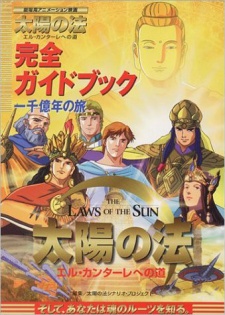
All over the place. Even when ignoring whether the continents of Atlantis and Mu were real, the film has mangled several facts of history to push its religious message. For starters, Rient Arl Croud started up the Incan Empire 7,000 years ago, which is a huge inconsistency since the origins of the real Incan Empire were in 1438. Given the Shakyamuni Buddha was born around 600 BC, Rient Arl Croud should be the latest reincarnation of El Cantare according to the real dates, but this would undermine Happy Science's Buddhist roots.

TV, 2000,
25 eps
Me:-
Author:-
The Moscow Combat Revue's airship crash occurs in Petrograd. Although the series is set in 1941, Petrograd was already renamed Leningrad and considered part of the Soviet Union in real-life.

TV, 1999,
? eps
Me:-
Author:-
One Piece is a unique case, as it clearly bases itself on The Golden Age of Piracy with 1600s flintlocks and ships, yet while most pirates look exactly like classic buccaneers all other characters including the Main Characters the Straw Hats have modern 21st century clothing. In fact the Straw Hats have only looked like traditional pirates in the climaxes of One Piece Film: Z and One Piece Film: Red. Ultimately justified since the world of One Piece is a Ocean Punk and as Egghead Island reveals a genuine Flooded Future World.
TV, 1997,
25 eps
Me:-
Author:-
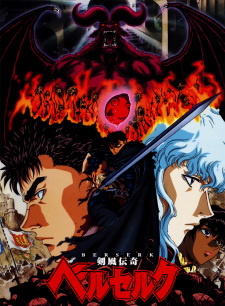
Berserk is primarily Medieval European Fantasy however it also has a gumbo of 14th century armour, 16th century palaces, 17th century frigates, and 18th century ballgowns all mixed together. Miura freely admitted he just took whatever was cool from different time periods rather than limit himself to a specific era.
• Guts the protagonist's outfits and armour in the first half of the Golden Age, would've as armour fanatics have detailed, been considered quite meagre for a medieval knight and mercenary. Having just a helmet, chest plate, pauldrons, small thigh tassets and cape. When he reunites with the Hawks a year later, Guts is noticeably wearing Japanese sode style shoulder pauldrons which is quite out of place compared to the rest of the European armour. Surprisingly, Guts' Black Swordsman and Berserker armours are actually more accurate to the plate armour of the Medieval period, despite obviously being highly stylised by in gothic Black Knight fashion. Knights also generally only wore capes ceremonially, while Guts along with Griffith freely wear capes into battle.
• Most of Casca's outfits have little basis in reality, at least in a medieval setting. She's got thigh-length leather boots, small strips of armour and a pink tunic; which was a highly uncommon colour. Then again Casca's clothing and armour is akin to what Joan of Arc was said to have worn in as a knight including "tight waist-high boots" (known as Calvary boots) and her pre-Eclipse armour is quite practical. Her beautiful ballgown and snow wear when Guts leave the band however, are from later time periods with the latter being closer to Renaissance-era clothing. Probably the most accurately medieval getup Casca wears, is the abbot style robe that she has on post Conviction Arc.
• In general several female characters such as Schierke, Sonia and Erica are shown wearing bloomers as undergarments which was a Renaissance invention as medieval Europe lacked such undergarments for women. Multiple male characters also have strapped leather codpieces rather than the ludicrous protruding ones that actually existed back then.
• Guts the protagonist's outfits and armour in the first half of the Golden Age, would've as armour fanatics have detailed, been considered quite meagre for a medieval knight and mercenary. Having just a helmet, chest plate, pauldrons, small thigh tassets and cape. When he reunites with the Hawks a year later, Guts is noticeably wearing Japanese sode style shoulder pauldrons which is quite out of place compared to the rest of the European armour. Surprisingly, Guts' Black Swordsman and Berserker armours are actually more accurate to the plate armour of the Medieval period, despite obviously being highly stylised by in gothic Black Knight fashion. Knights also generally only wore capes ceremonially, while Guts along with Griffith freely wear capes into battle.
• Most of Casca's outfits have little basis in reality, at least in a medieval setting. She's got thigh-length leather boots, small strips of armour and a pink tunic; which was a highly uncommon colour. Then again Casca's clothing and armour is akin to what Joan of Arc was said to have worn in as a knight including "tight waist-high boots" (known as Calvary boots) and her pre-Eclipse armour is quite practical. Her beautiful ballgown and snow wear when Guts leave the band however, are from later time periods with the latter being closer to Renaissance-era clothing. Probably the most accurately medieval getup Casca wears, is the abbot style robe that she has on post Conviction Arc.
• In general several female characters such as Schierke, Sonia and Erica are shown wearing bloomers as undergarments which was a Renaissance invention as medieval Europe lacked such undergarments for women. Multiple male characters also have strapped leather codpieces rather than the ludicrous protruding ones that actually existed back then.
OVA, 1993,
6 eps
Me:-
Author:-
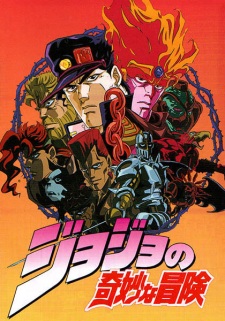
JoJo's Bizarre Adventure:
Battle Tendency:
• In the manga, Joseph is reading a Superman comic during a flashback that takes place a few years before the start of the story in 1938, which was the year of Superman's debut.
• Both the manga and the anime state that World War II has begun in 1938, when in reality it only begun a year later.
• In JoJo's Bizarre Adventure: Phantom Blood at the start Jonathan, Erina, George Joestar and Dio have pretty accurate outfits to Victorian England (the dorky bathers Jonathan and Erina wears being a case of Shown Their Work). Then by the Time Skip Dio rocks an ostentatious feather collar outfit and other pirate-looking outfits as a vampire, while Jonathan wears a modern crop top with shoulder pads and low slung pants that would've been "obscene" for a gentleman to wear back then. Erina's cleavage revealing dress on her honeymoon seems like a case of this too, but women's evening gowns were known to be more risqué by then. Though Erina having her hair worn down when Jonathan meets her again as an adult would've been unacceptable for a woman past the age of 16.
• Stone Ocean: When Weather Report started turning into Vincent van Gogh due to Bohemian Rhapsody's effect, he loses an ear and gets shot in the head twice, just like van Gogh. In reality, van Gogh only cut off the lobe of his ear and shot himself in the chest. Justified since Bohemian Rhapsody brings every story to life, fictional and historic.
• Steel Ball Run: Hirohiko Araki makes an author's note early on that the value of dollars discussed in the story are roughly equivalent to the modern dollars rather than 1890s dollars in order to convey the amounts to a modern reader more easily, rather than have to account for inflation.
• Joseph has an accurate flatcap, tie and jacket to 1938 New York, then by the climax he's got blue demin jeans which wouldn't come into fashion until several decades later, to say nothing of the crop top like his aforementioned grandfather. While Caesar has multiple ostentatious outfits which wouldn't likely be accepted on a man in 1930s Italy. As for the women, the beautiful Lisa Lisa has her hair long and straight in modern style while it was more common and preferred for women of class to have their hair in short waves. There's also her halterneck and strapless top with short skirt and leggings outfit when she fights Kars, which would've been too extreme for even the progressive women back then. Averted with Suzi Q, her polka dot dress seems like a case of this, but it was actually a fashion trend for women in 1938
Battle Tendency:
• In the manga, Joseph is reading a Superman comic during a flashback that takes place a few years before the start of the story in 1938, which was the year of Superman's debut.
• Both the manga and the anime state that World War II has begun in 1938, when in reality it only begun a year later.
• In JoJo's Bizarre Adventure: Phantom Blood at the start Jonathan, Erina, George Joestar and Dio have pretty accurate outfits to Victorian England (the dorky bathers Jonathan and Erina wears being a case of Shown Their Work). Then by the Time Skip Dio rocks an ostentatious feather collar outfit and other pirate-looking outfits as a vampire, while Jonathan wears a modern crop top with shoulder pads and low slung pants that would've been "obscene" for a gentleman to wear back then. Erina's cleavage revealing dress on her honeymoon seems like a case of this too, but women's evening gowns were known to be more risqué by then. Though Erina having her hair worn down when Jonathan meets her again as an adult would've been unacceptable for a woman past the age of 16.
• Stone Ocean: When Weather Report started turning into Vincent van Gogh due to Bohemian Rhapsody's effect, he loses an ear and gets shot in the head twice, just like van Gogh. In reality, van Gogh only cut off the lobe of his ear and shot himself in the chest. Justified since Bohemian Rhapsody brings every story to life, fictional and historic.
• Steel Ball Run: Hirohiko Araki makes an author's note early on that the value of dollars discussed in the story are roughly equivalent to the modern dollars rather than 1890s dollars in order to convey the amounts to a modern reader more easily, rather than have to account for inflation.
• Joseph has an accurate flatcap, tie and jacket to 1938 New York, then by the climax he's got blue demin jeans which wouldn't come into fashion until several decades later, to say nothing of the crop top like his aforementioned grandfather. While Caesar has multiple ostentatious outfits which wouldn't likely be accepted on a man in 1930s Italy. As for the women, the beautiful Lisa Lisa has her hair long and straight in modern style while it was more common and preferred for women of class to have their hair in short waves. There's also her halterneck and strapless top with short skirt and leggings outfit when she fights Kars, which would've been too extreme for even the progressive women back then. Averted with Suzi Q, her polka dot dress seems like a case of this, but it was actually a fashion trend for women in 1938

TV, 1992,
112 eps
Me:-
Author:-
Mitarai, when describing the atrocities he saw on the Chapter Black tape, says, "Have you ever seen a gigantic bomb wipe away millions who had never even picked up a weapon?!" In real life, the atomic bombings of Hiroshima and Nagasaki combined killed between 150,000 and 246,000 people, and while most were civilians, they were actively involved in the war effort, with people manufacturing munitions in their homes and children drilling with improvised weapons and being indoctrinated to die for the emperor.

Movie, 1986,
1 ep
Me:-
Author:-
Technically not in the anime but in "Mario and the Time Machine" Game.
=General=
• In the original version of the game, all of the characters speak in Modern English. However, the earliest form of English, Old English, first appeared in the 5th century AD, while Modern English first appeared in the 1500s. As such, certain characters, such as Plato in 369 BC, would have not used a language that would not exist until over 800 years afterwards. However, this is most likely intentional, so as to teach players historical facts in a language that they would likely understand.
=Alexandria (47 BC)=
• This section centers on returning Cleopatra's staff to her so that she can reign over Egypt; however, she first reigned in 51 BC (despite one of Cleopatra's guards saying that she was "crowned" in 52 BC) at the bequest of her father and alongside her brother, Ptolemy XIII. She then took sole control after a civil war between her and her brother in 47 BC.
• Cleopatra also says that her staff was passed down from her ancestors, although no such item exists in real life.
• Julius Caesar claims that he is allergic to cats; though his family line, in general, was afflicted with asthma, Caesar is not known to have been allergic to or even afraid of cats.
• Caesar also boasts about having conquered Pompeii, despite the town having been acquired by Roman general Sulla during the Social War in 89 BC, before Caesar held any power.
• One of Cleopatra's guards asks Mario to give one of Cleopatra's handmaidens a Wooden Snake to demonstrate his love for her, and after receiving the gift, she makes a comment about being bitten by the "love scarab." Neither animal is associated with romance or love: snakes are the aggressive guardians of royalty, and can also symbolize chaos, while scarabs symbolize the arrival of the Sun and the reincarnation of humans.
• Throughout several lines of dialogue, it is stated that "Ptolemy XI" is Cleopatra's father and "Ptolemy XII" is the brother that campaigns against Cleopatra. However, the numbers in their names are off by one: Ptolemy XII was the father and Ptolemy XIII was the brother.
• Several characters also use dates with before Christ; for example, when the handmaiden says that Caesar arrived in Egypt "in 48 B.C.". Though these dates are not incorrect, they would have not been used by people who lived close to fifty years before the birth of Jesus, and furthermore, this dating system was not created until 525.
• The history pages mention that Cleopatra had three sons with Mark Anthony, despite one of her children, Cleopatra Selene II, being female.
=Athens (369 BC)=
• Aristotle is depicted as an old man in-game, but as Aristotle was born in 384 BC, he would have only been fifteen years old. With that in mind, the rest of the interactions with him become anachronistic, as he only became Plato's student when he was seventeen or eighteen, and thus, he has not yet formulated any of the theories that are discussed in-game.
• A councilman mentions that Plato's Academy was founded "in 387 B.C." - while technically correct, a dating system based on Jesus would not have been used by someone who lived over three hundred years before he was born.
• The same councilman also claims that the Academy will last for over nine hundred years. In reality, the Academy was destroyed in 86 BC.
He also does not know whether the god of wine's name is Dionysus or Bacchus, despite "Bacchus" being the name adopted by the Romans.
=Calcutta (1947)=
• If Mario shows the Indian flag to the British judge, he angrily states that he would rather see the Saint George's Cross, referring to the flag of England. However, variations of the English flag were only used by the British Raj for coronation standards and naval ensigns; within the Raj, the regular Union Jack was considered the "national flag," while international representation of the Raj used the Governor-General of India's standard and the civil ensign (both of which incorporated the Union Jack). While the Union Jack does feature the Saint George's Cross (combining it with the crosses of Saint Andrew and Saint Patrick), the latter term is generally not used as a synonym for the former.
=Cambridge (1687)=
• The discovery of calculus is attributed uniquely to Newton, despite Gottfried Wilhelm Leibniz also discovering calculus around the same time as Newton, albeit independently; this led to a debate as to who should receive recognition for the discovery.
• Several characters state that Newton's Principia has not yet been published, for example, when Edmund Halley says that he is still working on the rough draft, but the book was published on July 5, even though the game takes place on December 25.
• Halley also says that he tracked a comet which orbited around the Earth in 1862. This is a typo; the comet passed by in 1682.
• A lecturer says that, while Newton was in his twenties, he said that his mind was "remarkably fit for invention." This quote seems to have been sourced from Leon M. Lederman and Dick Teresi's The God Particle, but the actual quote is "All this was in the two plague years of 1665 and 1666, for in those days I was in the prime of my age for invention and minded Mathematics and Philosophy more than at any time since."
• If Mario offers Halley an apple, he replies that he has already eaten one today "so as to keep the doctor away." The proverb of "an apple a day keeps the doctor away," Didn't existed in the 1600s.
=Florence (1500s)=
• An unnamed painter says that Michelangelo left the tutelage of Domenico Ghirlandaio simply because he was bored, but Ghirlandaio sent him to Lorenzo de' Medici as one of his best pupils.
• The history pages erroneously state that Michelangelo himself "broke his contract" with Ghirlandaio solely because he wanted to study the statues in Medici's garden.
• The same painter also gives Mario some "Renaissance Purple" Paint in what is visibly a modern paint can. Additionally, the term "Renaissance" first appeared in 1858.
• He also says that Michelangelo is interested in sculpting the Pope's tomb; although he approached the task enthusiastically, he was specifically commissioned by the Pope to construct the tomb.
=London (1843)=
• Catherine Dickens mentions her ten children, but six of them (Francis, Alfred, Sydney, Henry, Dora, and Edward) were born after 1843.
• She also references David Copperfield, which was first serialized from 1849 to 1850 and first published in 1850.
=Washington, D.C. (1863)=
• Mary Todd Lincoln is characterized as being forgetful and scatterbrained. Aside from her losing sanity progressively in life, there is no evidence of her acting this way in real life.
• Frederick Douglass visits the White House on the day of Abraham Lincoln's Emancipation Proclamation, on January 1; in reality, he visited sometime in the summer.
• Additionally, he visited to discuss the issue of black soldiers in the army, not the abolition of slavery.
=General=
• In the original version of the game, all of the characters speak in Modern English. However, the earliest form of English, Old English, first appeared in the 5th century AD, while Modern English first appeared in the 1500s. As such, certain characters, such as Plato in 369 BC, would have not used a language that would not exist until over 800 years afterwards. However, this is most likely intentional, so as to teach players historical facts in a language that they would likely understand.
=Alexandria (47 BC)=
• This section centers on returning Cleopatra's staff to her so that she can reign over Egypt; however, she first reigned in 51 BC (despite one of Cleopatra's guards saying that she was "crowned" in 52 BC) at the bequest of her father and alongside her brother, Ptolemy XIII. She then took sole control after a civil war between her and her brother in 47 BC.
• Cleopatra also says that her staff was passed down from her ancestors, although no such item exists in real life.
• Julius Caesar claims that he is allergic to cats; though his family line, in general, was afflicted with asthma, Caesar is not known to have been allergic to or even afraid of cats.
• Caesar also boasts about having conquered Pompeii, despite the town having been acquired by Roman general Sulla during the Social War in 89 BC, before Caesar held any power.
• One of Cleopatra's guards asks Mario to give one of Cleopatra's handmaidens a Wooden Snake to demonstrate his love for her, and after receiving the gift, she makes a comment about being bitten by the "love scarab." Neither animal is associated with romance or love: snakes are the aggressive guardians of royalty, and can also symbolize chaos, while scarabs symbolize the arrival of the Sun and the reincarnation of humans.
• Throughout several lines of dialogue, it is stated that "Ptolemy XI" is Cleopatra's father and "Ptolemy XII" is the brother that campaigns against Cleopatra. However, the numbers in their names are off by one: Ptolemy XII was the father and Ptolemy XIII was the brother.
• Several characters also use dates with before Christ; for example, when the handmaiden says that Caesar arrived in Egypt "in 48 B.C.". Though these dates are not incorrect, they would have not been used by people who lived close to fifty years before the birth of Jesus, and furthermore, this dating system was not created until 525.
• The history pages mention that Cleopatra had three sons with Mark Anthony, despite one of her children, Cleopatra Selene II, being female.
=Athens (369 BC)=
• Aristotle is depicted as an old man in-game, but as Aristotle was born in 384 BC, he would have only been fifteen years old. With that in mind, the rest of the interactions with him become anachronistic, as he only became Plato's student when he was seventeen or eighteen, and thus, he has not yet formulated any of the theories that are discussed in-game.
• A councilman mentions that Plato's Academy was founded "in 387 B.C." - while technically correct, a dating system based on Jesus would not have been used by someone who lived over three hundred years before he was born.
• The same councilman also claims that the Academy will last for over nine hundred years. In reality, the Academy was destroyed in 86 BC.
He also does not know whether the god of wine's name is Dionysus or Bacchus, despite "Bacchus" being the name adopted by the Romans.
=Calcutta (1947)=
• If Mario shows the Indian flag to the British judge, he angrily states that he would rather see the Saint George's Cross, referring to the flag of England. However, variations of the English flag were only used by the British Raj for coronation standards and naval ensigns; within the Raj, the regular Union Jack was considered the "national flag," while international representation of the Raj used the Governor-General of India's standard and the civil ensign (both of which incorporated the Union Jack). While the Union Jack does feature the Saint George's Cross (combining it with the crosses of Saint Andrew and Saint Patrick), the latter term is generally not used as a synonym for the former.
=Cambridge (1687)=
• The discovery of calculus is attributed uniquely to Newton, despite Gottfried Wilhelm Leibniz also discovering calculus around the same time as Newton, albeit independently; this led to a debate as to who should receive recognition for the discovery.
• Several characters state that Newton's Principia has not yet been published, for example, when Edmund Halley says that he is still working on the rough draft, but the book was published on July 5, even though the game takes place on December 25.
• Halley also says that he tracked a comet which orbited around the Earth in 1862. This is a typo; the comet passed by in 1682.
• A lecturer says that, while Newton was in his twenties, he said that his mind was "remarkably fit for invention." This quote seems to have been sourced from Leon M. Lederman and Dick Teresi's The God Particle, but the actual quote is "All this was in the two plague years of 1665 and 1666, for in those days I was in the prime of my age for invention and minded Mathematics and Philosophy more than at any time since."
• If Mario offers Halley an apple, he replies that he has already eaten one today "so as to keep the doctor away." The proverb of "an apple a day keeps the doctor away," Didn't existed in the 1600s.
=Florence (1500s)=
• An unnamed painter says that Michelangelo left the tutelage of Domenico Ghirlandaio simply because he was bored, but Ghirlandaio sent him to Lorenzo de' Medici as one of his best pupils.
• The history pages erroneously state that Michelangelo himself "broke his contract" with Ghirlandaio solely because he wanted to study the statues in Medici's garden.
• The same painter also gives Mario some "Renaissance Purple" Paint in what is visibly a modern paint can. Additionally, the term "Renaissance" first appeared in 1858.
• He also says that Michelangelo is interested in sculpting the Pope's tomb; although he approached the task enthusiastically, he was specifically commissioned by the Pope to construct the tomb.
=London (1843)=
• Catherine Dickens mentions her ten children, but six of them (Francis, Alfred, Sydney, Henry, Dora, and Edward) were born after 1843.
• She also references David Copperfield, which was first serialized from 1849 to 1850 and first published in 1850.
=Washington, D.C. (1863)=
• Mary Todd Lincoln is characterized as being forgetful and scatterbrained. Aside from her losing sanity progressively in life, there is no evidence of her acting this way in real life.
• Frederick Douglass visits the White House on the day of Abraham Lincoln's Emancipation Proclamation, on January 1; in reality, he visited sometime in the summer.
• Additionally, he visited to discuss the issue of black soldiers in the army, not the abolition of slavery.

TV Special, 1986,
1 ep
Me:-
Author:-
No, Princess Diana did not own a guinea pig as a child, nor did she bring it to school where it won a "pet contest"."Pet contests" weren't even a thing in the school she went to.
No, Princess Diana did not have a Character Tic of biting her thumb when anxious.
It is true that Diana attended Riddlesworth Hall School, but in actuality she was first educated at home by a governess, and then attended Silfield Private School.
No, Princess Diana did not have a Character Tic of biting her thumb when anxious.
It is true that Diana attended Riddlesworth Hall School, but in actuality she was first educated at home by a governess, and then attended Silfield Private School.

OVA, 1986,
2 eps
Me:-
Author:-
Honoo no Alpen Rose: The anime mentions that Lundi's father, Dr. Courtot, went "to Africa" (apparently Africa Is a Country) during the 1920s to work as a doctor and treat impoverished patients. It's also mentioned that before he arrived, Africa had no doctors, which is blatantly untrue — yes, Africa as a whole wasn't that economically developed during the '20s, but it certainly had basic necessities like hospitals (most third-world countries do). The oldest hospital in Africa is believed to be Somerset Hospital that was established in the 1800s, long before Alpen Rose's WW2 setting.

TV, 1982,
50 eps
Me:-
Author:-
Lucy-May of the Southern Rainbow: The first episode is stated to take place in 1837. In episode 33, Lucy-May mentions it's been three years since she came to Australia, meaning the year currently is 1840. In the next episode, while Arthur is working at a quarry, he hears an explosion, and his colleague tells him it is the sound of dynamite. But nitroglycerin, the raw material for dynamite, wasn't discovered until 1847.
TV, 1979,
40 eps
Me:-
Author:-
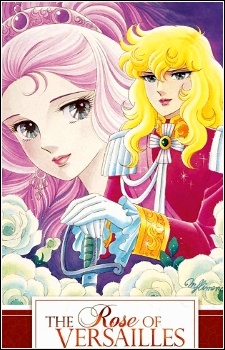
The Rose Of Versailles is surprisingly well-researched, but there are still a number of creative liberties taken.
• The main character, Oscar François de Jarjayes, is largely fictional. She is loosely based on Pierre-Augustin Hulin, commander of the French Guards who joined in the Storming of the Bastille. But that's more or less where the similarities end. Unlike Oscar, Hulin was not a noble, didn't have a close relationship with Marie Antoinette, and survived the battle to later serve as a loyal general to Napoleon (who was the one person Oscar truly feared).
• François Augustin de Reynier de Jarjayes is significantly older than he would have been in real life. He was born in 1745, which would make it extremely unlikely to have his sixth child just ten years later.
• Emilie de Jarjayes did not die of despair shortly after the Revolution broke out in real life. Reynier and her husband got divorced to distance herself from the former due to his loyalty to the king. She later remarried and died in 1837.
• Rosalie Lamorlière was indeed the final servant to Marie Antoinette as she was awaiting execution, but everything else about her in the series is basically fictional. She was not adopted and had no known connection to either Jeanne Valois or the Countess de Polignac. She also never married. Her mother did die when she was a child, but her father lived until 1812 and she had five other siblings. She had a daughter but the father is unknown.
• Following their convictions in the Affair of the Diamond Necklace, Jeanne de Valois-Saint-Rémy and Nicholas de la Motte were not tracked down and did not meet their end in what was essentially a murder-suicide shortly after escaping prison. They managed to escape to London, where she later was killed falling out a hotel window while trying to avoid debt collectors. He survived and eventually became a bodyguard to the future Charles X before dying in 1831.
• The Duke of Orleans in the anime is a Composite Character. The Orleans of the second half of the anime was Louis Phillipe II who took over the title on the death of his father Louis Phillipe I in 1785, but for convenience's sake in the anime they are the same man (averted in the manga, where the Duke of Orleans doesn't appear until after Louis Phillippe I's death).
• When Fersen joins the French Expeditionary Force, he serves as aide-de-camp under the Marquis de Lafayette. In real life, he served under the Comte de Rochambeau.
• The live-action film plays very fast and loose with French history.
Louis XVI's reign seems to only last a couple of years, Robespierre appears thirty at a time when he would have been barely eighteen, and Parisians sing "La Carmagnole des royalistes" after the taking of the Bastille (a song which wouldn't exist for another several years), just to name a few examples.
• The main character, Oscar François de Jarjayes, is largely fictional. She is loosely based on Pierre-Augustin Hulin, commander of the French Guards who joined in the Storming of the Bastille. But that's more or less where the similarities end. Unlike Oscar, Hulin was not a noble, didn't have a close relationship with Marie Antoinette, and survived the battle to later serve as a loyal general to Napoleon (who was the one person Oscar truly feared).
• François Augustin de Reynier de Jarjayes is significantly older than he would have been in real life. He was born in 1745, which would make it extremely unlikely to have his sixth child just ten years later.
• Emilie de Jarjayes did not die of despair shortly after the Revolution broke out in real life. Reynier and her husband got divorced to distance herself from the former due to his loyalty to the king. She later remarried and died in 1837.
• Rosalie Lamorlière was indeed the final servant to Marie Antoinette as she was awaiting execution, but everything else about her in the series is basically fictional. She was not adopted and had no known connection to either Jeanne Valois or the Countess de Polignac. She also never married. Her mother did die when she was a child, but her father lived until 1812 and she had five other siblings. She had a daughter but the father is unknown.
• Following their convictions in the Affair of the Diamond Necklace, Jeanne de Valois-Saint-Rémy and Nicholas de la Motte were not tracked down and did not meet their end in what was essentially a murder-suicide shortly after escaping prison. They managed to escape to London, where she later was killed falling out a hotel window while trying to avoid debt collectors. He survived and eventually became a bodyguard to the future Charles X before dying in 1831.
• The Duke of Orleans in the anime is a Composite Character. The Orleans of the second half of the anime was Louis Phillipe II who took over the title on the death of his father Louis Phillipe I in 1785, but for convenience's sake in the anime they are the same man (averted in the manga, where the Duke of Orleans doesn't appear until after Louis Phillippe I's death).
• When Fersen joins the French Expeditionary Force, he serves as aide-de-camp under the Marquis de Lafayette. In real life, he served under the Comte de Rochambeau.
• The live-action film plays very fast and loose with French history.
Louis XVI's reign seems to only last a couple of years, Robespierre appears thirty at a time when he would have been barely eighteen, and Parisians sing "La Carmagnole des royalistes" after the taking of the Bastille (a song which wouldn't exist for another several years), just to name a few examples.

TV, 1979,
13 eps
Me:-
Author:-
While the anime has many instances of Shown Their Work, it has even more instances of Artistic License – History.
• Prussia
• When the Prussian army is seen invading France, their military uniforms are dark green. Prussian military uniforms in the 1870s were actually dark bluenote . Oddly enough, the anime got the French military uniforms down correctly.
• The Prussian flag is depicted as blue and red. In real life, it looked a Black Eagle.
• The anime's repeated insistence that the Prussians have a rule not to shoot women or children, which is blatantly untrue.
• While cases of civilians being killed have been done, the German coalition forces were not bloodthirsty cartoonish villains and indeed they by MO did not engage in unwanton killings of women and children, even civilian men. AS a rule they did avoid killing civilians especially after a battle and once the region has been stationed by troops
• France
• The French flag is depicted as the modern-day tricolore flag, but since the anime is set in 1870, it should have been this.
• Apart from correctly noting the date when it occured (May 21, 1871), the depiction of the Semaine sanglante has many historical inaccuracies.
• Andréa claims that the French army do not take prisoners and kill indiscriminately, but in Real Life, 43,522 Communards were taken prisoner, including 1,054 women, though most were sentenced to death, hard labour and deportation.
• The soldiers are depicted as blindly following orders, when in Real Life many of them switched sides and refused to open fire on civilians.
The leader of the Paris Commune was Louis Charles Delescluze, not Jules Francoeur.
• Real life people
• Adolphe Thiers and Léon Gambetta were indeed real people, but the anime depicts them as arch-enemies with Thiers as a sociopathic Rich Bitch and Gambetta as the Bourgeoisie government's Token Good Teammate, when in real life the two were friends-turned-political-opponents.
• The anime takes the Historical Villain Upgrade to the extreme with Thiers, having him dry the French capital of wealth and diginity for his own purposes, and flee to Prussia when he receives backlash for his unpopular decisions.
• Thiers in Real Life opposed the French war with Prussia, knowing that a conflict with Bismarck's forces was too dangerous. In the anime, he agrees to the Prussians invading the country in exchange for protecting his wealth.
• Léon Gambetta in Real Life was a lawyer and Republican statesman, but in the anime, he is a General.
No, Thiers did not personally plot the death of Léon Gambetta in Real Life.
• No, Thiers did not sabotage France during the Battle of Champigny.
• No, Thiers did not flee France in March 1871 because of his unpopular decisions.
• No, Thiers was not a wealthy landowner, he was the bastard child of a government official and became a Self-Made Man through journalism. He did become wealthy later in life though.
• No, Thiers never said that the Parisians weren't the true French, and that the true French were the citizens of Versailles.
• Prussia
• When the Prussian army is seen invading France, their military uniforms are dark green. Prussian military uniforms in the 1870s were actually dark bluenote . Oddly enough, the anime got the French military uniforms down correctly.
• The Prussian flag is depicted as blue and red. In real life, it looked a Black Eagle.
• The anime's repeated insistence that the Prussians have a rule not to shoot women or children, which is blatantly untrue.
• While cases of civilians being killed have been done, the German coalition forces were not bloodthirsty cartoonish villains and indeed they by MO did not engage in unwanton killings of women and children, even civilian men. AS a rule they did avoid killing civilians especially after a battle and once the region has been stationed by troops
• France
• The French flag is depicted as the modern-day tricolore flag, but since the anime is set in 1870, it should have been this.
• Apart from correctly noting the date when it occured (May 21, 1871), the depiction of the Semaine sanglante has many historical inaccuracies.
• Andréa claims that the French army do not take prisoners and kill indiscriminately, but in Real Life, 43,522 Communards were taken prisoner, including 1,054 women, though most were sentenced to death, hard labour and deportation.
• The soldiers are depicted as blindly following orders, when in Real Life many of them switched sides and refused to open fire on civilians.
The leader of the Paris Commune was Louis Charles Delescluze, not Jules Francoeur.
• Real life people
• Adolphe Thiers and Léon Gambetta were indeed real people, but the anime depicts them as arch-enemies with Thiers as a sociopathic Rich Bitch and Gambetta as the Bourgeoisie government's Token Good Teammate, when in real life the two were friends-turned-political-opponents.
• The anime takes the Historical Villain Upgrade to the extreme with Thiers, having him dry the French capital of wealth and diginity for his own purposes, and flee to Prussia when he receives backlash for his unpopular decisions.
• Thiers in Real Life opposed the French war with Prussia, knowing that a conflict with Bismarck's forces was too dangerous. In the anime, he agrees to the Prussians invading the country in exchange for protecting his wealth.
• Léon Gambetta in Real Life was a lawyer and Republican statesman, but in the anime, he is a General.
No, Thiers did not personally plot the death of Léon Gambetta in Real Life.
• No, Thiers did not sabotage France during the Battle of Champigny.
• No, Thiers did not flee France in March 1871 because of his unpopular decisions.
• No, Thiers was not a wealthy landowner, he was the bastard child of a government official and became a Self-Made Man through journalism. He did become wealthy later in life though.
• No, Thiers never said that the Parisians weren't the true French, and that the true French were the citizens of Versailles.

TV, 1975,
52 eps
Me:-
Author:-
Dub-only example. The German version of the theme song has the lyric "You know Rembrandt and Rubens, and they all painted in Flanders"note Euch sind Rembrandt und Rubens bekannt, und sie malten alle im Flandernland. But Rembrandt was a Dutch painter who worked in Holland.

Movie, 1943,
1 ep
Me:-
Author:-
Maybe averted as the cartoon has the Japanese attacking "Demon Island", not Pearl Harbor. But the cartoon has the attack force suffering zero casualties, while in Real Life the Japanese lost 29 of their 414 planes. And no Japanese soldiers set foot on Oahu.
More Like This
More



Challenge Interest Stacks

Time ended

Time ended

Time ended

Time ended

Time ended
Time ended
MyAnimeList Interest Stacks