by
Sarah Hinchliff PearsonPolicyPhoto by Dmitry Ryzhkov, 2014, licensed with CC BY-NC-SA 2.0, Flickr, remixed by Creative Commons, 2026, CC BY 4.0.
I like to say I am a “writer who lawyers”. I begin here because I want to name my biases up front. I am a lawyer, but I come to this work first and foremost as a writer thinking about the conditions that will allow us to continue to share knowledge publicly. And in spite of—or perhaps because of—the fact that I am a lawyer, I have a healthy skepticism about the power of legal terms and conditions. The law will play a role, but the challenge of keeping the internet human will ultimately be navigated by the stories we imagine and tell. We need new stories.
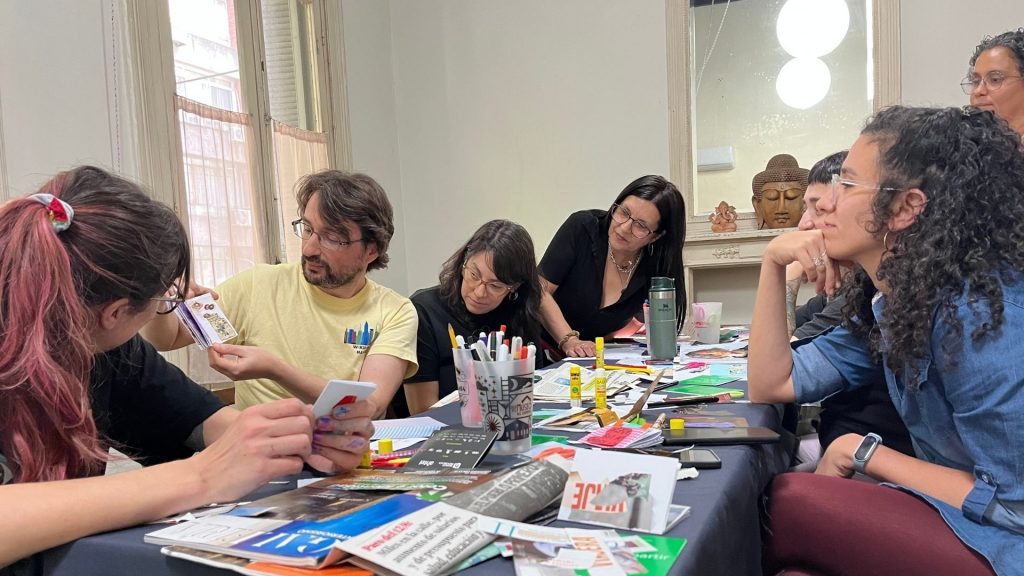
In November 2025, we had the privilege of supporting and participating in Semana de la Cultura Libre (Open Culture Week) in Montevideo, Uruguay: a week-long celebration of open culture organized by CC Uruguay. Through panels, workshops, concerts, and conversations, the week offered a powerful reminder that free culture is not an abstract idea but a living practice shaped by local communities, histories, and needs.
This month, CC will be represented at the AI Impact Summit in Delhi, an international gathering shaping the future of AI policy and practice. The 2026 Summit follows the AI Action Summit in Paris in February 2025, where CC underscored a simple but essential truth: without civil society, there can be no public interest.
In 2026, Creative Commons will continue to ensure that technological change strengthens, not erodes, the commons and improves the acts of sharing and access that are part of our everyday lives. We do this by applying first principles, practical strategies, and lessons learned from decades of advancing the commons. Sharing of research, educational materials, heritage, and creative works are acts of generosity—these are the gifts people give to the commons. Access to these same shared resources enables collaboration, innovation, and understanding. Together, this is how we improve access to knowledge and build a more equitable future.
by
Anna TumadóttirAbout CC"Kaleidoscope 2" by Sheila Sund is licensed under CC BY 2.0, remixed by Creative Commons licensed under CC BY 4.0
This year marked the first year of a new strategic cycle for Creative Commons, and it began amid profound change. The ground beneath the open internet continues to shift. Powerful technologies, driven largely by multibillion-dollar companies, are reshaping how knowledge and creativity are shared online, concentrating power in the hands of a few and testing long-standing assumptions about openness and access.
As we look back on 2025, it’s clear that the internet as we know it is changing. Information is being removed from the web or locked away. We are experiencing a crisis in the commons, driven in part by current AI development practices. New systems are emerging in response—from content monetization schemes and licensing agreements designed to protect large rightsholders, to the ongoing morass of lawsuits about how AI services are using content as data. We are in the midst of a major reconfiguration of how we share and reuse content on the web.
As we’ve discussed before, the rise of large artificial intelligence (AI) models has fundamentally disrupted the social contract governing machine use of web content. Today, machines don’t just access the web to make it more searchable or to help unlock new insights; they feed algorithms that fundamentally change (and threaten) the web we know. What once functioned as a mostly reciprocal ecosystem now risks becoming extractive by default.
At Creative Commons, we’ve long believed that binary systems rarely reflect the complexity of the real world—nor do they serve the commons very well. The internet, like the communities that built it, thrives on nuance, experimentation, and shared stewardship. That’s why we’re continuously working to introduce choice where there has been little, and to advocate for systems that acknowledge the diversity of values and needs across the web.
by
Brigitte Vézina,
Dee HarrisOpen Culture, Open Heritage"Watering Place at Marley" by Alfred Sisley, 1875, CC0, Art Institute of Chicago, remixed with "TAROCH balloon" by Creative Commons/Dee Harris, 2025, CC0.
Creative Commons and the TAROCH Coalition (Towards a Recommendation on Open Cultural Heritage) announce the launch of the Open Heritage Statement, now open for signature by governments, organizations, and institutions worldwide. Developed by more than 60 organizations across 25 countries within the Coalition, the Statement defines shared values, highlights key challenges, and sets action-oriented priorities for closing the global gap in equitable access to heritage in the public domain.