
Advertise in Nature special features
Promote your organization’s scientific products, research, and recruitment in Nature’s special features — including Nature Index, Nature Spotlight, and Nature Career Guides.
Reach Nature readers and position yourself as a thought-leader in your field, and an employer of choice, alongside the Nature brand.
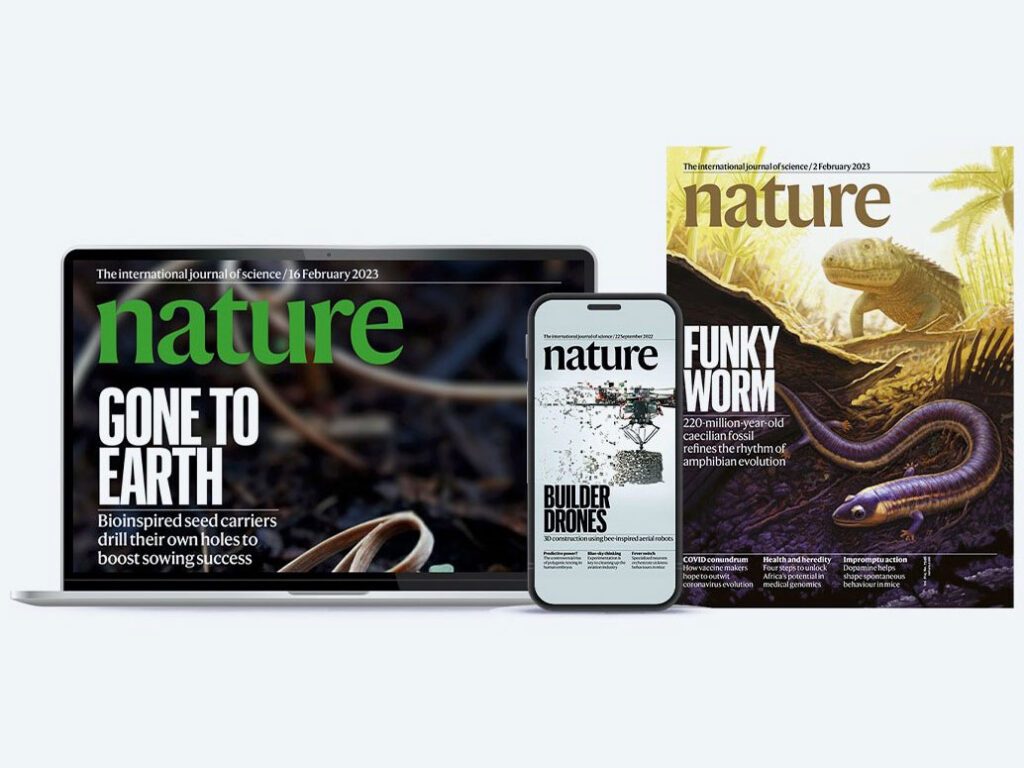
Book Your Spot
- Decide which of our special features you want to advertise against — view the topics below.
- Choose whether to run display advertising and/or branded content.
- Display ads build critical awareness of your research, employer brand, job vacancies, products, or events.
- Branded content uses compelling storytelling to engage Nature audiences with your message. Your article can be written by our award-winning custom media team or supplied by your organization.
- Book with us before the booking deadlines detailed in the calendars.
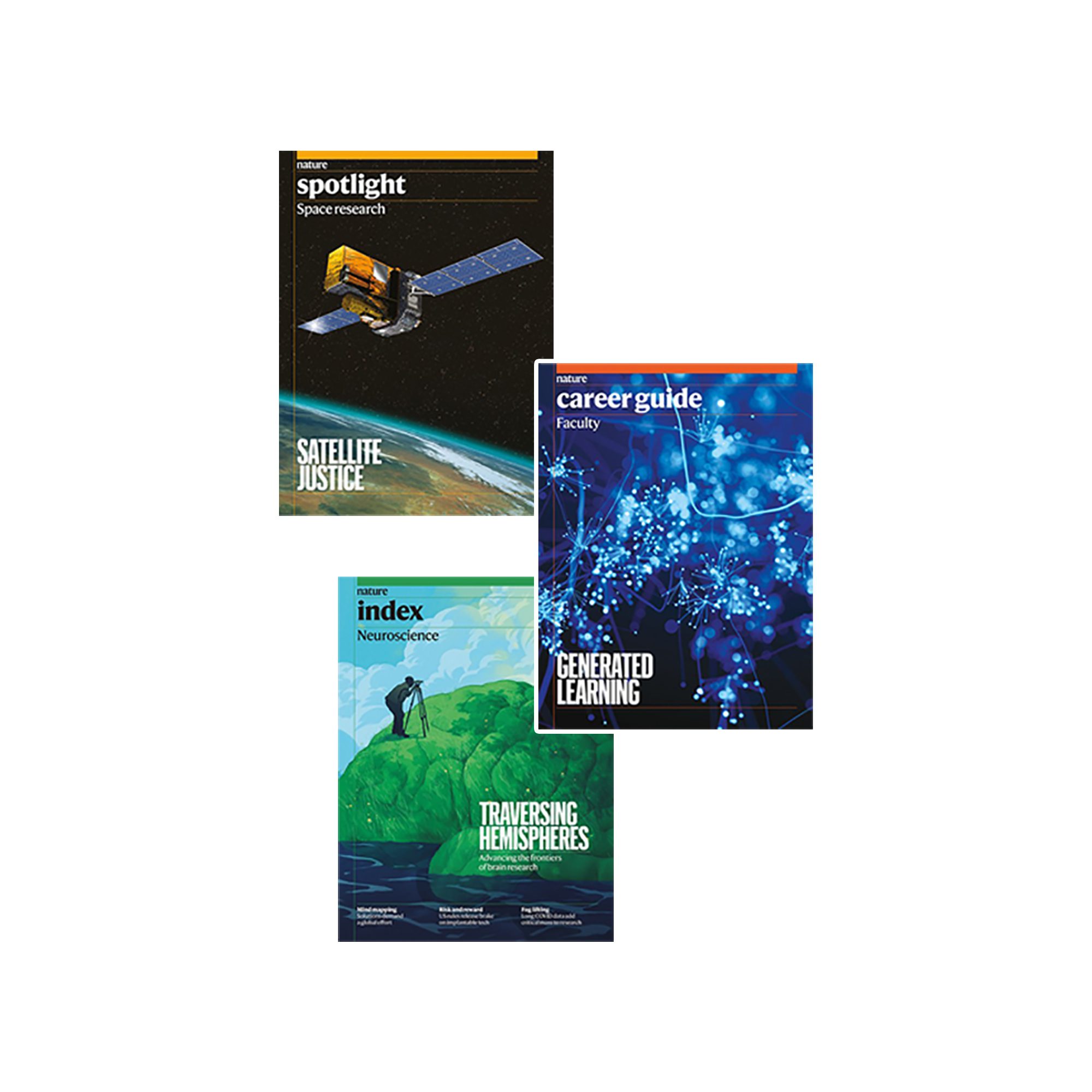
There are 3 types of special feature you can advertise in — all published in Nature:
- Spotlights: profiling a specific area of scientific interest.
- Nature Index supplements: based on data in the Nature Index.
- Career Guides from Nature Careers: helping scientists around the world with job-hunting and career advice.
2026 Nature special features calendar:
View the topics in more detail.
| Publication date in 2026 | Nature special feature and topic | Booking deadline for branded content (print and online) | Booking deadline for branded content (online only) | Booking deadline for display ad (submission of PDF) |
|---|---|---|---|---|
| 05-Feb | Spotlight: Sensors | 17-Oct-25 | 7-Nov-25 | 23-Jan |
| 19-Feb | Spotlight: Mexico | 31-Oct-25 | 18-Nov-25 | 06-Feb |
| 26-Feb | Nature Index: Chemical Sciences | 07-Nov-25 | 21-Nov-25 | 13-Feb |
| 12-Mar | Spotlight: Nutrition | 21-Nov-25 | 15-Dec-25 | 27-Feb |
| 26-Mar | Nature Index: China | 05-Dec-25 | 09-Jan | 13-Mar |
| 16-Apr | Nature Index: Cancer | 05-Jan | 30-Jan | 01-Apr |
| 23-Apr | Spotlight: Philanthropy, Awards & Prizes | 16-Jan | 06-Feb | 10-Apr |
| 07-May | Spotlight: Synthetic Biology | 30-Jan | 16-Feb | 23-Apr |
| 11-Jun | Spotlight: Drug Discovery | 03-Mar | 27-Mar | 27-May |
| 23-Jul | Career Guide: Nordics | 10-Apr | 08-May | 10-Jul |
| 30-Jul | Nature Index: Nanotechnology | 17-Apr | 15-May | 17-Jul |
| 17-Sep | Spotlight: Digital Health/Wearables | 05-Jun | 30-Jun | 04-Sep |
| 24-Sep | Nature Index: Regenerative Medicine | 12-Jun | 03-Jul | 11-Sep |
| 01-Oct | Spotlight: Energy | 24-Jun | 17-Jul | 18-Sep |
| 08-Oct | Spotlight: Infectious Diseases | 26-Jun | 20-Jul | 25-Sep |
| 15-Oct | Nature Index: Biomedical Engineering | 10-Jun | 31-Jul | 02-Oct |
| 12-Nov | Career Guide: Neuroscience | 07-Aug | 28-Aug | 30-Oct |
| 03-Dec | Nature Index: Europe | 28-Aug | 18-Sep | 20-Nov |
| 10-Dec | Spotlight: ASEAN Member Countries | 04-Sep | 25-Sep | 27-Nov |
Nature special features synopses:
-
Career Guide: Nordics (23 Jul)
The Nordic Career Guide will be a supplement in Nature, due to be published in July, 2026. This supplement will explore the research landscape in the Nordic countries (Denmark, Finland, Iceland, Norway, Sweden and other territories), possibly focusing on projects and opportunities at the Arctic six, an alliance of universities in the region, and/or some of the challenges facing PhD students or early career researchers moving to the region.
-
Career Guide: Neuroscience (12 Nov)
The career guide on neuroscience will be a supplement in Nature, due to be published in November, 2026. This career guide will look at the universities and organisations driving the study into consciousness, possibly including profiles on some of the researchers leading this field and their thoughts on what the future will bring.
-
Nature Index: Chemical Sciences (26 Feb)
Chemical sciences sits at the core of discovery across disciplines, increasingly bridging studies in biology, materials science and environmental engineering. It plays an essential role in solving some of the world’s most urgent scientific and technological problems, from designing sustainable catalysts and greener manufacturing processes to enabling breakthroughs in drug development and battery materials. In this supplement, we will explore how the field is evolving — and expanding — in scope, influence and ambition, and showcase the teams around the world that are leading the charge.
-
Nature Index: China (26 Mar)
In the space of just a few years, China has risen to become the global leader in high-quality natural-science output. Its lead in the Nature Index is still growing rapidly as it continues to invest in advances in technologies such as green materials or artificial intelligence, many of which are successfully being turned into innovations used across the globe. In this supplement, we will explore the frontiers that China’s research system might push forward next — including those in the biological and health sciences where it has historically had less expertise — and consider how it might approach international science and collaboration in the years ahead.
-
Nature Index: Cancer (16 Apr)
Cancer is one of the most urgent and costly challenges in global health, with incidence projected to rise significantly in the coming decades. Hospitals and clinics are seeking more effective ways to address the disease, from personalised therapies to more comprehensive screening strategies. And while technological advances are transforming how cancer is prevented, diagnosed and treated, questions around equity and access are becoming more complex. This supplement will examine the evolving cancer research landscape, highlighting the places and people that are driving advances in the field, and probing the ethical questions that accompany them.
-
Nature Index: Nanotechnology (30 Jul)
The field of nanotechnology continues to push the boundaries of what’s possible at the molecular scale. With growing links to materials science, electronics and biotechnology, nanotechnology is driving innovation across almost every major sector, from drug development to electronics. This supplement will showcase the discoveries that have made the biggest impact in the field, and the collaboration networks that are leading the way. As climate change continues to affect communities around the world, and food, energy and healthcare needs are becoming more urgent, advances in nanotechnology will be crucial to address global challenges.
-
Nature Index: Regenerative Medicine (24 Sept)
From stem cell therapies to bioengineered tissues, regenerative medicine is redefining the possibilities of modern healthcare. Once largely experimental, the field is now moving steadily toward clinical translation, with growing investment across academia and industry. This supplement will examine the institutions and individuals that are producing high-quality research in this space, and the collaborations that are combining world-class expertise in tissue engineering, gene editing and biomaterials. As scientific ambition meets clinical complexity, the path to scalable, equitable regenerative treatments will be a focus for many.
-
Nature Index: Biomedical Engineering (15 Oct)
As global health issues become more complex, biomedical engineering is proving essential to the future of medicine. From advanced prosthetics and bioelectronics to tissue engineering and diagnostic imaging, this field is transforming how we might approach and treat disease in the coming decades. But despite massive investment in the space, taking discoveries from the lab to the clinic remains slow and expensive, and very difficult to scale. In this supplement, we will showcase the institutions and researchers that are taking on these challenges and finding ways to translate fundamental discoveries into life-saving applications.
-
Nature Index: Europe (3rd Dec)
Research collaboration and funding in Europe has been forced to deal with a series of shocks across the last decade, from the UK’s vote to leave the European Union in 2016 to Russia’s invasion of Ukraine in 2022 (and the COVID-19 pandemic that emerged in between). But despite these challenges, its universities and researchers continue to be at the cutting edge of major scientific advances. In this supplement, we will look at the fields, institutions and individuals who are at the forefront of these developments and consider what the future holds for the next iteration of the continent’s pan-national research-funding programme, Horizon Europe.
-
Spotlight: Sensors (5 Feb)
Sensor technology is a fast-growing and diversified field, spanning fields such as AI, robotics, climate modelling, and healthcare. The spotlight on sensors will be a supplement in Nature, due to be published in Feb, 2026. It aims to cover some of the latest developments in the field, areas such as sensors in healthcare (electrochemical sensors in implants, neural sensors) and the use of sensors in smart cities (to improve emergency responses or city management).
-
Spotlight: Nutrition (12 Mar)
The spotlight on nutrition will be a supplement in Nature, due to be published in March, 2026. This spotlight will focus on new discoveries in the field of nutrition, areas such as the use of food and supplements in anti-aging (bio-hacking), the rise of nutrigenomics (how diet can affect gene expression) and/or the use of digital nutrition to model metabolism.
-
Spotlight: Philanthropy, awards & prizes (23 Apr)
The spotlight on philanthropy, awards and prizes will be a supplement in Nature, due to be published in April, 2026. It will focus on the stories and efforts of private funders and award winners, exploring how their work is having a global impact. It will possibly include a story on how private funders in the US are bridging the gaps left by decreases in federal funding.
-
Sportlight: Synthetic biology (7 May 2026)
The spotlight on synthetic biology will be a supplement in Nature, due to be published in May, 2026. This supplement will explore some of the breakthroughs in the field, including the use of synthetic biology in medicine (living drugs – ie engineered bacteria for smart probiotics, the creation of synthetic cells, genome editing) and/or the increasing importance of biosecurity with engineered products.
-
Spotlight: Drug discovery (11 Jun)
The spotlight on drug discovery will be a supplement in Nature, due to be published in June, 2026. This series will explore some of the new discoveries in the field, including topics such as AI designed drugs and their subsequent trials, molecular editing for manipulation of existing drug molecules and/or discoveries in psychedelic assisted therapies.
-
Spotlight: Digital health and wearables (17 Sep)
The spotlight on digital health and wearables will be a supplement in Nature, due to be published in September, 2026. This series will explore some of the new innovations in this field, including topics such as AI patient monitoring and wearable biosensors, and might include a feature focusing on tech of the future.
-
Spotlight: Energy (1 Oct)
The spotlight on energy will be a supplement in Nature, due to be published in October, 2026. This spotlight will investigate breakthroughs and challenges in the field, including topics such as Nuclear fusion research, cybersecurity and cyberattacks on grid systems, and supporting AI’s future energy demands.
-
Spotlight: Infectious diseases (8 Oct)
The spotlight on infectious diseases will be a supplement in Nature, due to be published in October, 2026. This series will focus on some of the leading research in the field, possibly including profiles of academics on the frontline, investigating the re-emergence of diseases such as Marburg, and/or a feature on some of the advancements in the use of AI in disease detection.
-
Spotlight: ASEAN countries (10 Dec)
The spotlight on ASEAN countries will be a supplement in Nature, due to be published in December 2026. This series will investigate some of the research highlights from these countries (Brunei, Cambodia, Indonesia, Laos, Malaysia, Myanmar, Philippines, Singapore, Thailand, Vietnam), potentially including work on international collaborations, growth of the research landscape in Malaysia, Indonesia and Vietnam and/or the creation of smart cities.
Advertise in Nature journal special features
"*" indicates required fields
