

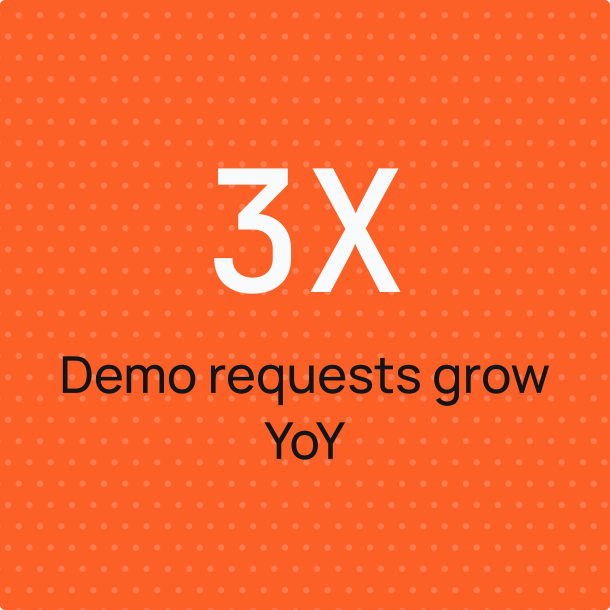
Marketing teams now publish independently across multiple European markets — with demo requests tripling in the months following launch.
Planday is a workforce management platform used by businesses across Europe to manage employee scheduling, time tracking, and team communication. Operating across multiple markets including the UK and Scandinavia, Planday needed a website infrastructure that could support global expansion while allowing their marketing team to move faster — without depending on engineering or product teams.
Size: Enterprise
Industry: SaaS / Workforce Management
Location: Denmark, EU
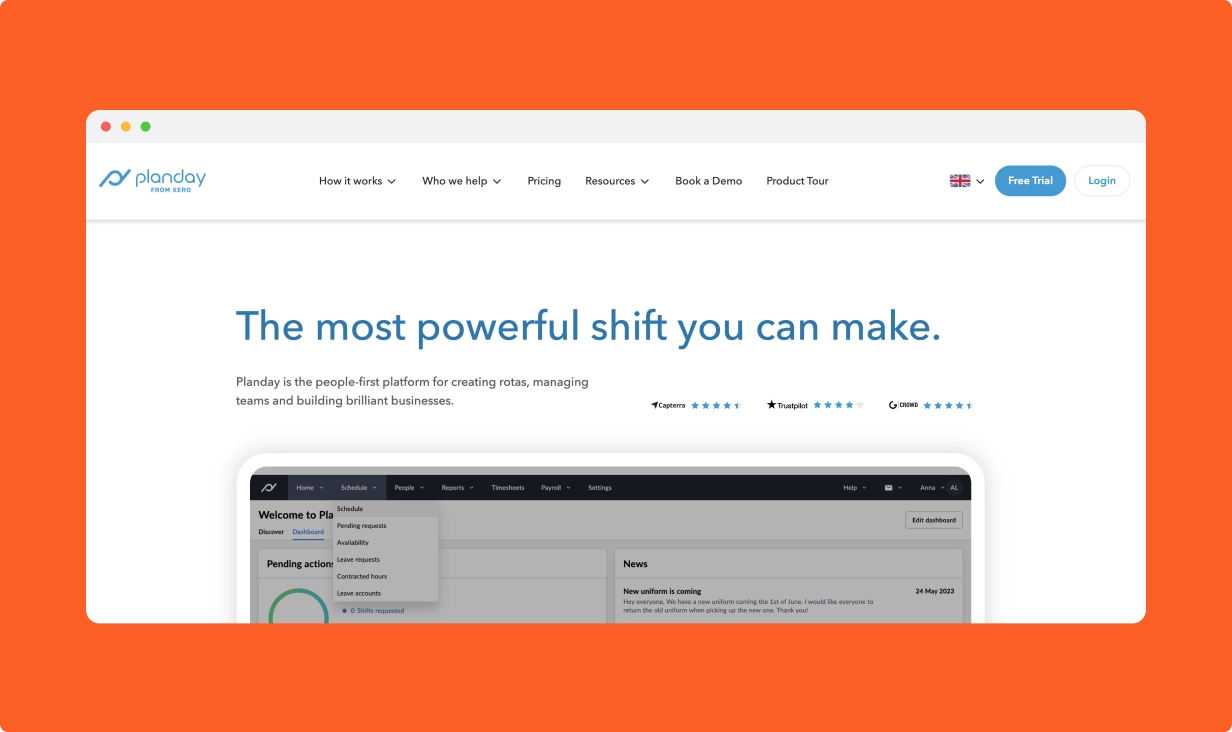
Planday's marketing team was stuck. Every content update required coordination across multiple departments. Localization was manual and slow. Publishing across European markets meant waiting behind product priorities. Blazity delivered a complete website migration — rebuilding the platform on Next.js with Hygraph and automated translation workflows — giving marketing full independence and driving 3x growth in demo requests.
Planday's previous website was built on Builder, with localization workflows that were largely manual and required collaboration between several departments. Marketing depended on engineering and product teams for translation workflows, which often meant waiting behind other priorities.
This created a cascade of operational problems: content couldn't be published quickly, consistency across markets was difficult to maintain, and scaling organic content initiatives into new regions was impractical. The company was heavily reliant on paid acquisition partly because the infrastructure for scaling organic content simply didn't exist.
At the same time, Planday was undergoing a full brand refresh and needed the new website to reflect updated accessibility standards, modern design practices, and improved user experience across all markets.
This wasn't a simple CMS swap. Planday needed a complete platform migration that would:
- Rebuild the entire website on a modern, component-based architecture
- Migrate all existing content — blog articles, customer stories, webinars, resource libraries, and marketing pages — while preserving SEO value and design consistency
- Implement automated multilingual workflows that eliminated dependency on other teams
- Integrate analytics and marketing tooling across the new platform
- Implement a full rebrand with improved accessibility standards
- Launch across all markets in a single rollout without disruption
Blazity delivered a complete website migration and rebuilt Planday's platform with a scalable, component-based architecture designed for global content operations:
- Application: The website was rebuilt using Next.js with TypeScript and a modern component architecture built on Tailwind CSS and shadcn/ui. The frontend was structured around reusable components that work consistently across pages and markets, developed and tested in isolation using Storybook.
- Content Platform: The content infrastructure was migrated from Builder to Hygraph, a headless CMS that supports structured content management across multiple regions and languages. This gave the marketing team direct control over content creation and publishing without requiring engineering support.
- Localization System: Lokalise was integrated with Hygraph to create an automated translation workflow. Instead of managing separate page versions for each language, marketing teams can now maintain multiple translations from a single content structure — eliminating the manual coordination that previously bottlenecked every multilingual update.
- Content Migration: All existing content was carefully migrated from the previous CMS: blog articles, customer stories, webinars, resource libraries, and marketing pages. Structure, SEO value, and design consistency were preserved throughout.
- Analytics & Marketing Integrations: The new platform was integrated with Planday's analytics tooling to measure user behavior, marketing performance, and campaign impact with greater accuracy.
- Accessibility & UX: The new design system was implemented with accessibility standards in mind, ensuring improved readability, consistent component usage, and a better user experience across devices and regions.
Engagement model: Dedicated project team delivering the full migration, rebrand implementation, and content operations setup. Individual components were validated first, followed by full page testing and content validation across languages and regions before a single-rollout launch across all markets.
The impact was immediate and measurable. Demo requests — one of Planday's primary conversion metrics — grew 3x year-over-year in the months following launch, with momentum continuing to build.
Beyond conversion improvements, the new architecture fundamentally changed how Planday manages its website operations. Marketing teams can now independently publish and localize content across multiple European markets without relying on engineering or product teams. Multilingual updates are executed from a single workflow instead of coordinated across departments.
With a modern component-based architecture, automated translation workflows, and improved content management capabilities, Planday now has a scalable digital platform ready to support continued growth across Europe — and the marketing independence to move at the speed the business demands.
We'll respond within 12 hours with next steps.